

















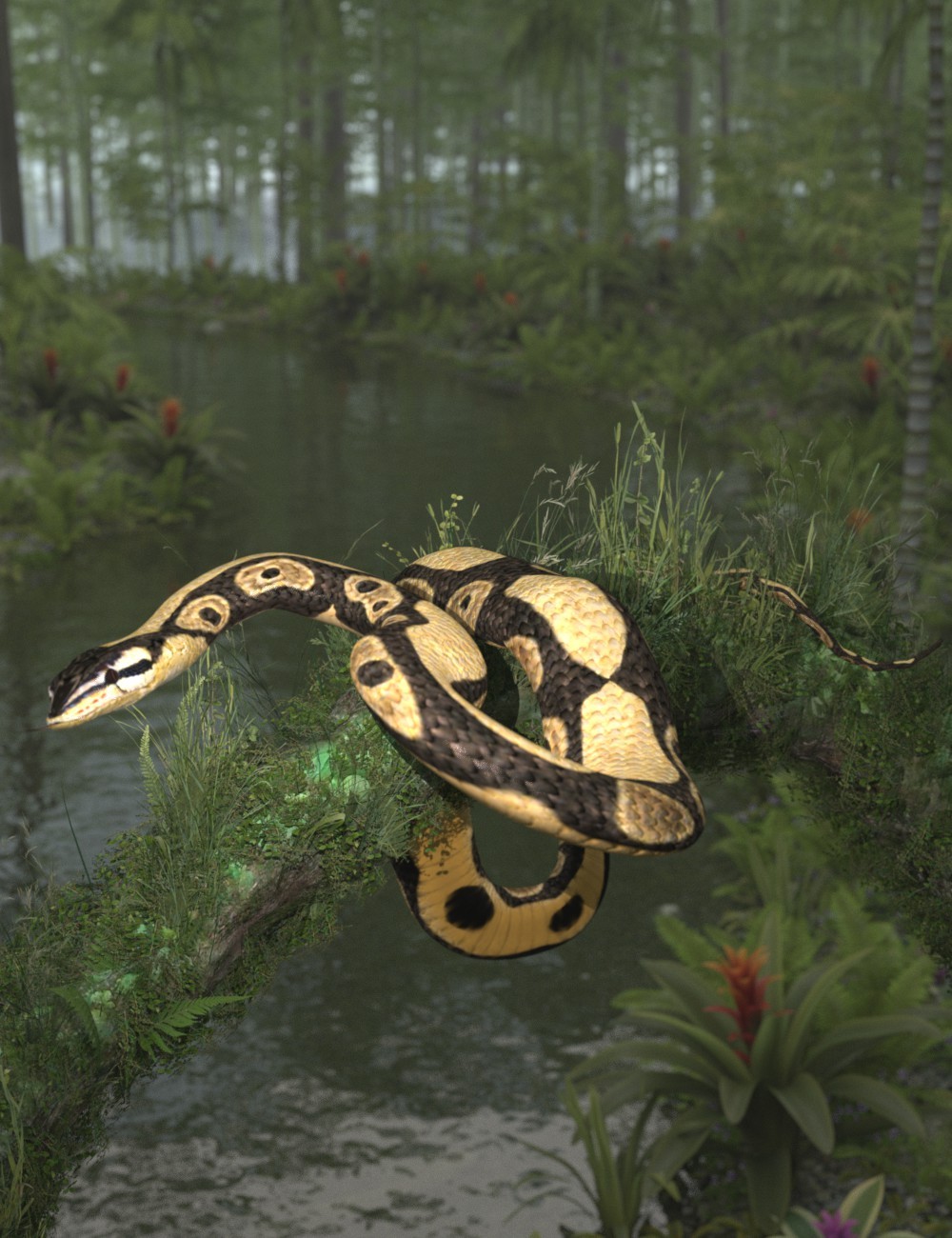
Ball Python by Ken _Gilliland
Close
Hover over top left image to zoom.
Click anywhere to exit.
Members remain the original copyright holder in all their materials here at Renderosity. Use of any of their material inconsistent with the terms and conditions set forth is prohibited and is considered an infringement of the copyrights of the respective holders unless specially stated otherwise.
No AI - This artwork was created entirely by hand or with traditional digital tools.
Description
Snake of the day... it's the Ball Python from Snakes of the World v1.
It is also called the royal python. This nonvenomous constrictor is the smallest of the African pythons, growing to a maximum length of 182 cm (72 in). The name "ball python" refers to its tendency to curl into a ball when stressed or frightened. Ball pythons are typically nocturnal or crepuscular, meaning that they are active during dusk, dawn, and/or nighttime. This species is known for its defense strategy that involves coiling into a tight ball when threatened, with its head and neck tucked away in the middle. This defense behavior is typically employed in lieu of biting, which makes this species easy for humans to handle and has contributed to their popularity as a pet. The species is non-venomous and considered docile.
The ball python is particularly revered by the Igbo people in southeastern Nigeria, who consider it symbolic of the earth, being an animal that travels so close to the ground. Even Christian Igbos treat ball pythons with great care whenever they come across one in a village or on someone's property; they either let them roam or pick them up gently and return them to a forest or field away from houses. If one is accidentally killed, many communities on Igbo land still build a coffin for the snake's remains and give it a short funeral. In northwestern Ghana, there is a taboo towards pythons as people consider them a savior and cannot hurt or eat them. According to folklore a python once helped them flee from their enemies by transforming into a log to allow them to cross a river.
Its diet in the wild consists mostly of small mammals and birds.
The species is considered "Near Threatened." It experiences a high level of exploitation and the population is believed to be in decline in most of West Africa. It is primarily threatened by poaching for the international exotic pet trade. It is also hunted for its skin, meat and use in traditional medicine. Other threats include habitat loss as a result of intensified agriculture and pesticide use.


Comments (6)
This really shows how flexible your snake models are!!!
Fascinating! Thanks for the information.
Beautiful looking Snake and always love your narrative regarding your characters :)
Fantastic work!
Great Portrait of a rare Animal!
Great models Ken !