















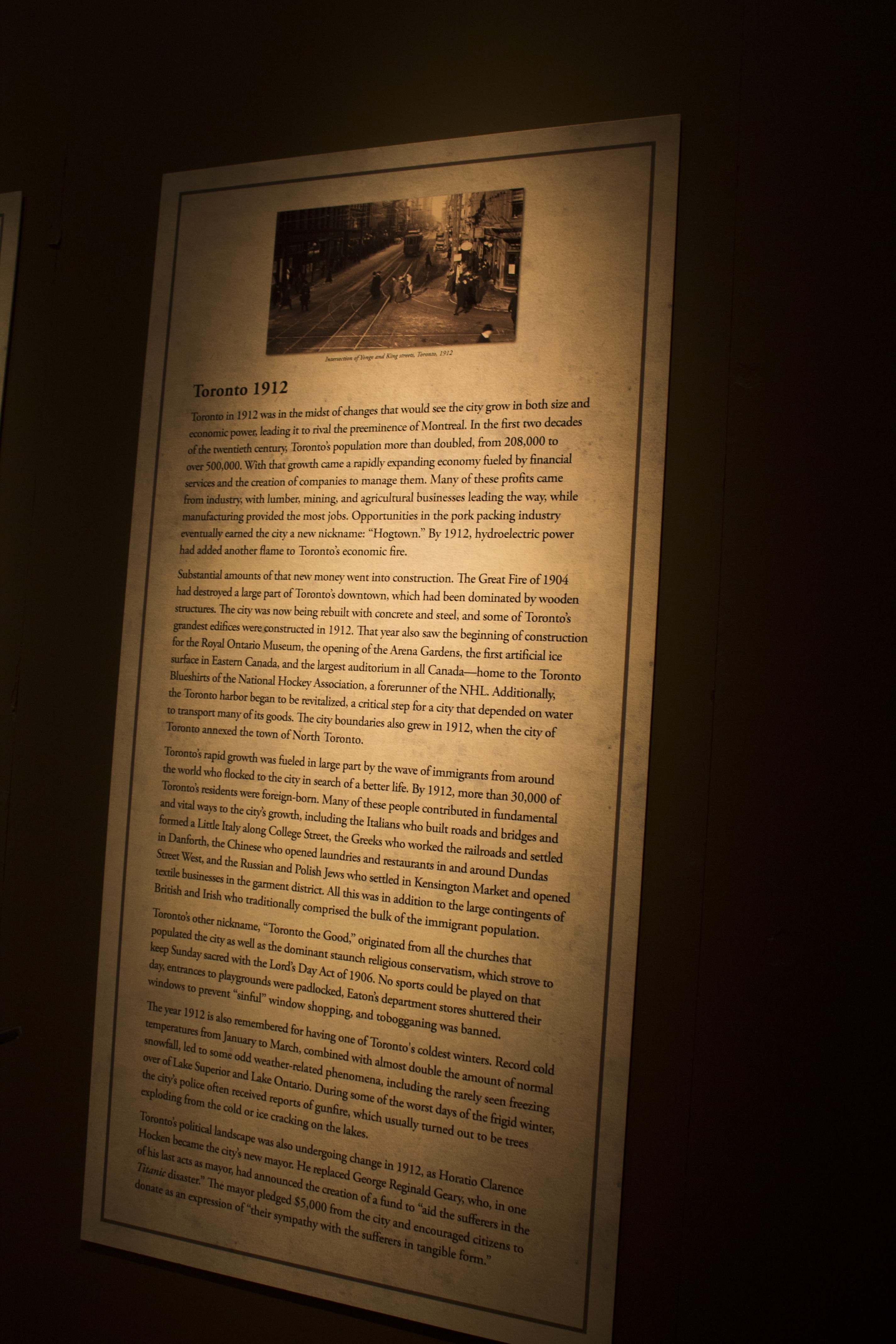
Toronto 1912 - Titanic Exhibit by APlusDesign
Close
Hover over top left image to zoom.
Click anywhere to exit.
Members remain the original copyright holder in all their materials here at Renderosity. Use of any of their material inconsistent with the terms and conditions set forth is prohibited and is considered an infringement of the copyrights of the respective holders unless specially stated otherwise.
No AI - This artwork was created entirely by hand or with traditional digital tools.
Description
Toronto was growing rapidly in size and power, more than doubling in size in the first two decades of the twentieth century, surging from 208,000 to more than 500,000. The growth fed economic growth, financial services and creation of companies to manage them. A lot of profit came from industry, especially lumber, mining and agriculture. Most jobs came through the manufacturing. They got the nick name Hogtown with the pork packing industry opportunities. By 1912 came hydroelectric power which spurred the economy growth even more.
With the Great Fire of 1904 destroying most of the downtown area, instead of wooden structures the construction built up in concrete and steel. 1912 started the construction of the ROM (Royal Ontario Museum), opening of Arena Gardens the first artificial ice surface in Eastern Canada and largest auditorium in all of Canada and home to the Toronto Blueshirts of the National Hockey Association (forerunner of NHL). The Toronto Harbour began to be revitalized and city boundaries expanded.
Immigrants around the world looking for a better life came to Toronto which fuelled the major growth. In 1912, more than 30,000 of their residents were foreign-born. They were a major contributor to the growth of the city: Italians built the roads and bridges, formed Little Italy along College Street, Greeks worked the railroad and settled in Danforth, the Chinese opened laundries and restaurants in and around Dundas Street West and the Russian and Polish Jews who settled in Kensington Market, opening textile businesses in the garment district. This was in addition to the bulk of immigrants who were British and Irish coming in.
Toronto gained another nickname, Toronto the Good. There were a lot of churches that populated the city, plus dominating staunch religious conservatism. Sunday was to be kept sacred with the Lord's Day Act of 1906. On that day, no sport could be played, playground entrances were padlocked, Eaton department stores had to shutter their windows to stop 'sinful' window shopping and tobogganing was banned.
1912 was also the year for one of Toronto's coldest winters; record cold temperatures from January to March, almost double the normal snow, and the rare freeze over of Lake Superior and Ontario. Police got reports of gunfire which often ended up being trees exploding from the cold (here I learned trees could explode O.o) or ice cracking on the lakes.
Horatio Clarence Hocken became the new mayor in 1912. He was replacing George Reginald Geary; one of his last acts as mayor was the creation of a fund to help those who suffered from the Titanic disaster, pledging $5000 from the city and encouraging citizens of Toronto to donate as well, to show their sympathy in 'tangible form'.
#Titanic #Exhibit

Comments (0)
No comments yet
Sign In or Register to share your thoughts.