


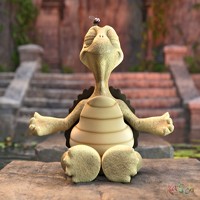













For Jacomina (dochtersions) by anahata.c
Close
Hover over top left image to zoom.
Click anywhere to exit.
Members remain the original copyright holder in all their materials here at Renderosity. Use of any of their material inconsistent with the terms and conditions set forth is prohibited and is considered an infringement of the copyrights of the respective holders unless specially stated otherwise.
No AI - This artwork was created entirely by hand or with traditional digital tools.
Description
Hi.
I had to step away for my teeth, back, and home. But I wanted to do this for a while, so here it is!
This is for Jacomina (dochtersions), an artist and poet who some of you know, and who my older friends here knew as well, and always loved.
My dedi is at the end, but so you know: I wrote about my first experience at a church organ, playing JS Bach---Jacomina's favorite composer (and I assume the favorite of her husband as well---Karel.) I chose the story because I hope it's fun. But also because it's about a great, great artist, whose works mean so much to Jacomina; and because her work reminds me of him---a statement I hope she'll accept (she's a very humble soul). She's reading in a second or third language---she's Dutch---so I hope my dense prose isn't impossible to translate....but I've told her many times that her English---which she translates herself---is often better than mine! So I hope this won't be difficult. (Hope, hope...)
Being tired, my prose needs work! I apologize for clumsiness and tangled sentences---refunds offered on request. It's a bow to a winner of Artist of the Year---more than once---yes? Forgive me for not remembering! At least once! Jacomina's been very open about her health, here, so this is addressed to all she's been through as well as the deep beauty she gives. She deserves the best.
I'll return to your galleries this weekend. Thanks for visiting, as always! You're all so loyal, and I greatly appreciate every one of you .Have a fine weekend, and inspiration to all! mark
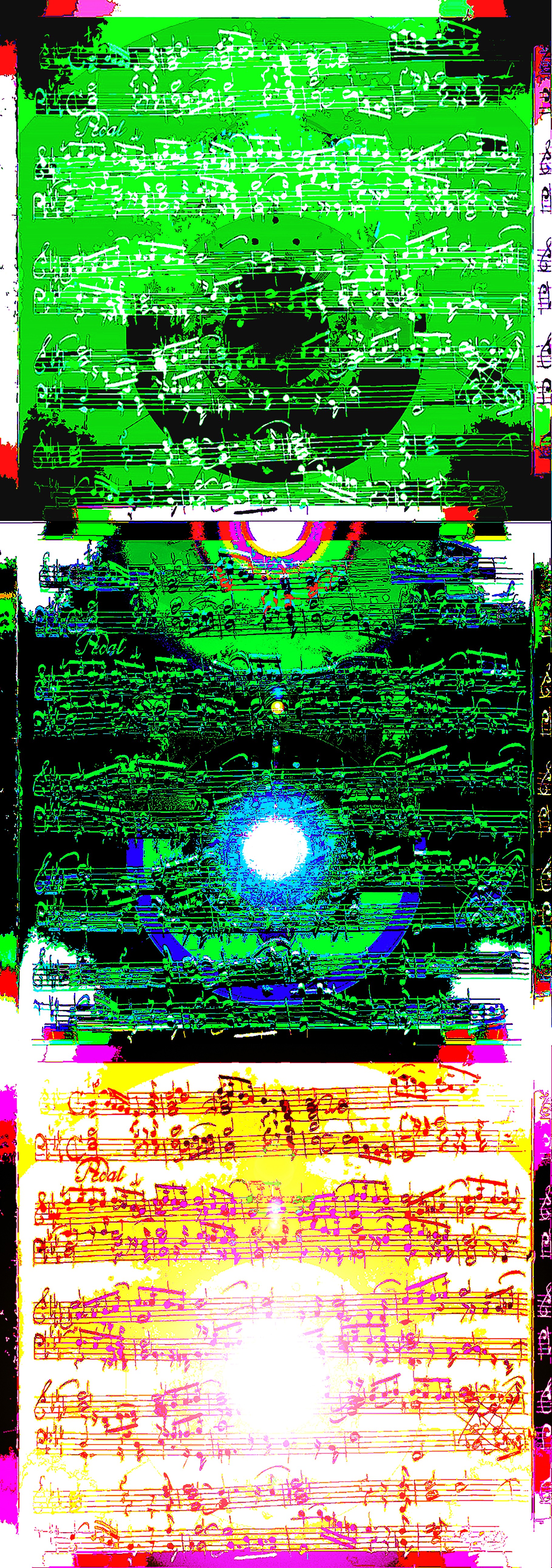
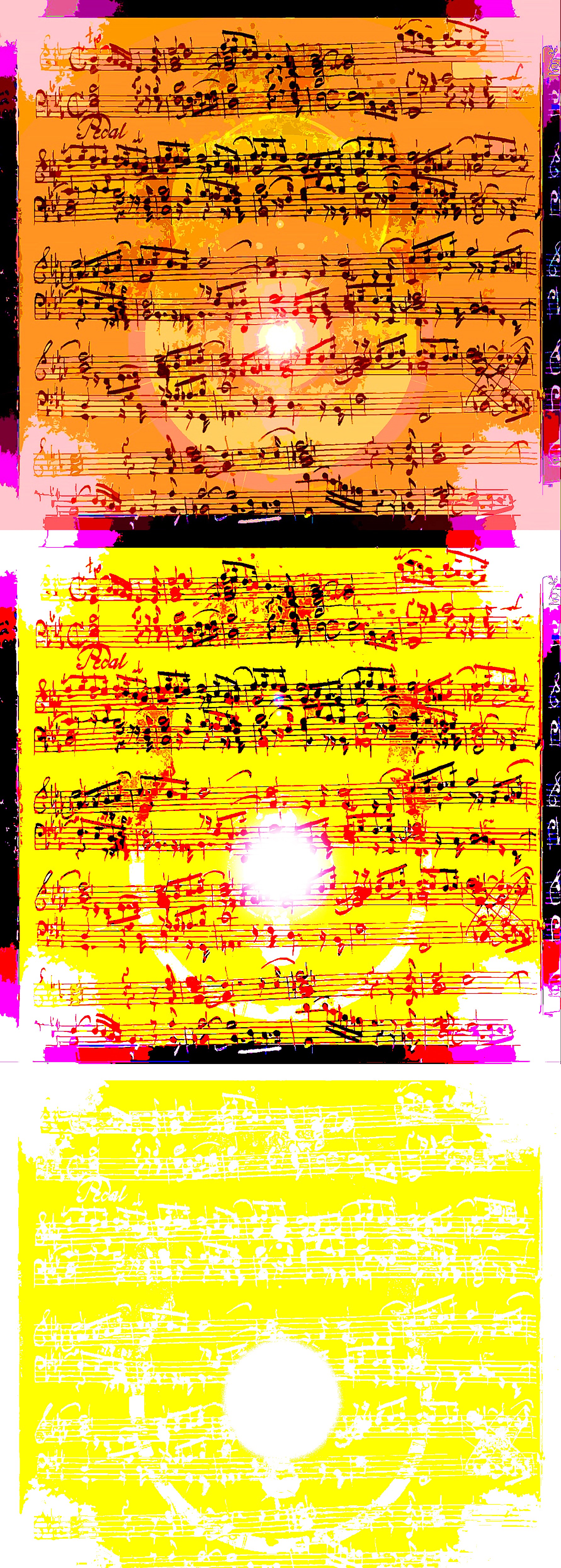
(the 2 images---best in full---are taken from an old manuscript of Bach's "St. Anne Prelude and Fugue" for Organ. The manuscript is public domain; from the Bach Archiv in Leipzig)
------------------
The Story
It was a cold, blustery night. I plunged through the storm, swatting away the snow, trying not to fall on the sidewalk---which, by now, had become a solid sheet of ice. A woman dashed by, her head buried in her scarf: "Are you ok?" I shouted. She didn't hear. She zoomed past, was whisked away by the winds, and disappeared...
Why was I out on a night like this?
To play on a church organ---a very 'special' church organ: It was housed in one of the most dilapidated churches in the state---an abandoned, crumbling, and deeply unsafe structure, that was still standing, rarely looked after, and sitting like an abandoned shipwreck between a graveyard and a convenience store.
But it had an organ---a church organ---with 2-story-high pipes, 3 keyboards, and a sound which, in its heyday, could rattle half the neighborhood. And here I was, someone who'd never touched an organ in his life, with the opportunity to play in a church, without services or meetings to interrupt (this was a perennial problem for organists)---and where no one would hear me play (which was a major blessing, believe me).
I got permission, I trekked through the storm, and I found it.
The Church
I arrived at the entrance, freezing and exhausted, and yanked at the doors---they were oak, extremely heavy, and sat there like solid rock. They finally opened, I was catapulted into the vestibule---dripping puddles of water everywhere--I regained my balance, sloshed into the hall, and got my first glimpse of this 'church':
OMG!
"Dilapidated" barely covered it: The floor was so cracked, I thought someone had bombed it. The pews were splintered and un-seatable. Rafters were on the floor, while others dangled from the ceiling like strange piñatas---which, I swore, were about to fall on my head. The stained glass---what was left of it---was shrouded behind webs of dead electrical wires, ripped tapestries, and generally unnamable debris. "What happened here?" I thought. (It looked like a ruin from WWII.) "And why did they tell me this place was 'totally safe'?"
But wait---I found it!
Stuffed into a cave at the top of a narrow staircase, the organ: It was tucked into the rafters as if the church were embarrassed that anyone should see it; and there was a pitifully small lamp there, some aged, yellowed scores, a small wooden crucifix, and the pungent odor of rot and mildewed wood. You got the impresssion that no one had been up here for ages; and the last person who had been here had either perished from starvation, or been whisked away by ghosts....
I had to be crazy, but I climbed the stairs and: Voila! For all its cracks, this organ was stunningly intact! The pipes were damaged---yes---but all of them were present! And there were pedals, stops (see below), a music stand, and a tall and striking crucifix. They even had a serving tray with a pitcher---an ancient pitcher, but a pitcher. (Maybe they had Room Service up here: Who knows...)
Now, to a pianist---which is what I was---a church organ was an assault to the senses. First, it was like sitting in the cockpit of a medieval rocket: WIth all the knobs and keys, I expected the thing to take off. Second, pianos didn't have pipes. (This organ's pipes reached 2 stories; while some pipes reach 4 stories or higher: Super large 'speakers'.) Third: This organ had four keyboards---I italicize that because I want to express what a shock this was. These keyboards are called "manuals," btw, which doesn't make it any easier...
Fourth: It had pedals---these long heavy appendages which fan out beneath you like gigantic wooden fingers---which I had no idea what to do with. (You play them with your feet, while playing with your hands: The first time I tried it, I almost fell over.) And, last: It had all kinds of knobs---those "stops" I mentioned above---with names like Prinzipal, Rohrflöte, Sesquialtera, which, to a novice, didn't help. Stops change the sounds, ok? But, to me, they were absolutely terrifying. You learn that when you pull the wrong stops: Play a chord, and you'll think the world is about to collapse.
So my big question was: How in the world does one play this thing? It was a monster! All I knew was: 3 keyboards, humongous pedals, and a small console full of stops seemed way too much for any sane person: This old monster demanded a level of acrobatics I'd never faced as a pianist.
BUT.
(Get ready.)
The reason a musician would go out on a night like this, to enter a church that should've been condemned a decade ago, was one word. You ready?
Bach.
Let me repeat that: BACH.
Was that loud enough?
Johann Sebastian Bach,1685 to 1750: That's what kept me in that church. Bach hovered over the classical world like a colossus; and, when you studied him---especially as a composer---you learned the meaning of "tremble": His music was towering...and, since I came here to play his organ works---many of which were massive and exceedingly difficult---I was trembling to my toes. I brought with me one of the most demanding of the bunch: The Prelude and Fugue in D Major, BWV 532. (It's a killer, trust me.) And---to lighten things up (wink, wink)---I would follow with the St. Anne Prelude and Fugue in Eb Major. First, these were NOT the pieces to start with, if you'd never played an organ before. And second, these may not be household names for many of you, but to a musician, they evoked awe with generous side-order of terror. i'd played them at the piano (badly), but to play them at the organ? No, no, no, no, no..."Pray for me," I whispered: "I'm going in, Lord: Tell my family if I don't come out alive..."
I pulled out my brand new copy of Clavier-Übung III, which contained the "St. Anne" (and which is a master collection and tres difficult); I opened the score, placed my feet over the pedals, pulled-out every stop I could find, took a deep breath, and began.
OMG!
The Prelude opens with a blasting chord, then a race-down the scale---a flourish, then a bow---and I must've released the loudest stops in creation, 'cause that passage nearly knocked over the church. I'm not joking: The place rattled like a wooden shed in a hurricane.
Further, the pipes, being damaged, let out these 'shrieking' sounds, like ghosts raised from the dead who were reeeeeeeallly unhappy about being woken. And the pedal-notes could've opened up a crater in South America.
"That's it!" I said: "I'm through!"
I grabbed my music, bowed to the beast, and headed for the stairs---when---
Whoosh! A woman appeared! I looked closely: I knew her! A teacher and a nun, connected with the church. I'd seen her before: She was in her 40s; had piercing eyes and a long flowered gown; and---in this light---she looked like she'd walked-in from the mists of Ancient Samaria.
"Who are you?" she asked, stunned that I was there.
"I was given permission to be here," I stammered: "I hope that's ok..."
(I have to admit: I was expecting the Organ Police to come down and take me away.)
"Don't worry," she said: "It's fine that you're here---but why did you stop playing? You were playing the St. Anne!"
"I was trying," I said, embarrassed
"Then why did you stop?"
(Didn't she know?) "I didn't want to bring down the church," I said.
"Oh, it won't collapse!" she said, smiling: "It grumbles and roars, but it's never fallen yet."
At that, she climbed the stairs, and said: "You sure picked a heck of a piece to start with! (Staring:) And you've got the 'D Major' there too!" She whispered in my ear: "That St. Anne fugue? It's a monster! And the pedals at the end will kill you!"
"Can you play it?" I said.
"Of course. I've taught it."
"Great! Will you play for me?"
"Oh no, no, no," she said: "I just came here to see who was here."
"Oh---please!" I pleaded: "I'm just learning, and it would help so much to see an expert play it---please!"
She took a deep breath: "Ok, but just this once..."
She looked at the music, then brushed it aside; then she changed all the stops---staring back at me as if to say "whoa, did you make a mess of these!"---and proceeded to play the St. Anne, complete---and it was breathtaking! The church shook; and some of the passages sounded like they had chainsaws in them (kettiingzagen - from the cracked and wobbling pipes): But it was monumental. This great, great piece shined through the debris like the sun beaming through a torrent.
Further: She knew Bach. Implicitly! For one, she understood his lines---without getting technical, they're the melodic lines (or "voices") that all play at the same time, in most of Bach: i.e., several melodies playing at once (counterpoint). In fact, Bach's lines are some of the most opulent in music history; and this woman understood the way they 'spoke' to each other, cajoled each other, caressed each other and challenged each other; how they made musical-love by interweaving in a multi-layered cosmic ballet. She was masterful: I was utterly immersed in her playing.
When she finished, I applauded wildly.
"Oh, don't do that!" she cried: "It's not right! For me, this is prayer---and you would never applaud prayer, would you?
"See, I'm a nun," she said, "and these things are very private for me. Bach's music is the greatest personal prayer I know..."
Then, as an 'encore', she played several pieces from Bach's miracle, the Orgelbüchlein ("Little Organ Book): I always felt the whole of Bach was summed-up in these little jewels. And here's the essence of Bach: It was as if he'd gathered the secrets of the cosmos, then packed them into these pieces as if he were sent from heaven to give us snapshots of the workings-of-the-universe. And her exquisite renditions made them silken, like molten gold or strands of light weaving through the night. In fact, many of its lines move like underground rivers gliding beneath the earth's surface: She caught that too. It was "divinity in motion": movement so subtle and so 'sure', because, like divinity, it had everything in it..
When she finished, she smiled and said: "I must go...but you can play now...please...be my guest!" And she left.
I didn't play. I was left with the feeling that every performer has after a great performance: There's nothing more to say! I packed my music, and left...
A Footnote, on Composing
When you study classical composition, you write in the style of the great composers---everybody does it: You write fugues ala Bach, arias ala Mozart, sonatas ala Beethoven, etc. It inspires you in so many ways. But it can be a weeeeeee bit intimidating.
Composing like Bach led all of us to cry: "You weren't human, Mr. Bach!" (He wasn't. I'm pretty sure.) "You may have been a decent guy," we said, "but you made so much great music---and every damned day---that you drove us all crazy. Look: It took me a month, JS, to write one passable fugue: Yet you turned out scores of them, and of the highest quality! So be merciful: Our fugues sound like last month's dinner, warmed over. Look upon us kindly, be not harsh: In 6 or 7 centuries we'll get to where you are! A promise!"
(A good friend, after completing her third fugue, said: "I'm done! Byyyyyyyyyye!" We all laughed, because she was a terrific composer; but anyone who's composed ala Bach knows exactly how she felt.)
Finally, it isn't that study should intimidate us or make us give up: No---not at all! It teaches everything from technique to inspiration; and it moved us to find the deepest and most personal vision inside us. "Bach showed me the stars," said one friend; for me, he showed me the cosmos---both inner and outer---and that was a gift beyond words.
* * *
Well, I returned to that church 3 times; and I actually played those pieces. I played them badly, mind you, but I played them. And, a confession: I played the pedals on the keyboards (sorry! don't put me in jail!). But it was thrilling because even a fumbling dancer can feel transcendence when they dance to transcendent music...
Finally, years later, I played the Orgelbüchlein on my synthesizer: Every morning It became my morning prayer. Thus I finally understood what that woman said, years back: That playing these pieces day after day was a personal offering, a communion, a benediction.
Which brings me to my words to Jacomina:
Anyone's who's been a regular in your gallery, Jacomina, knows how opulent your work is, how rich and like a garden of flowers (in full-bloom). You'll probably object to my making this comparison, but I'm gonna make it, so "put on your seatbelt" (maak je borst maar nat---I hope that's close): After walking through your fractals (and paintings and photographs and poems) for so long, I truly find the spirit in them that I always found in Bach. It's in the way the lines in your fractals swirl and interact with each other. It's in your amazing mix of human darkness with waves of transcendence and light---a light that's always there, always. And your light radiates from deep inside you, a huge beam graced with beauty and love. I mean that---your art and you are filled with love. I just can't emphasize that enough: In the decade or so that I've known you, you've radiated love, grace, light and blessing, always. And that, to me, is like prayer; and a great blessing.
And I think of how you've been so open with us about your struggles, pains and exhaustions. So I'll say again what I've said before: If there were a wand I could wave to erase all the hardships you've had, I'd wave it in a heartbeat. It's simply not fair that you have to go through these great health struggles; and it's so moving that you exude such love while you're going through them. Give me the wand (I'll cry to heaven), and I'll wave it until your servent, "daughter of zion," is raised up and given all the light she deserves. We have an expression in English: "From my lips to God's ears". May this prayer be heard in the highest places...if I could deliver it myself, I would.
To you and Karel---your soulmate and beloved husband who's with you through everything (and who's an organist himself!): May you both be bathed in great blessings and light. And Jacomina, maybe Bach should've written a "Jacomina" Fugue---or a "Jacomina Variations" (ala the "Goldberg Variations," one of my personal favorites)---with full pedals, stops, and a million manuals, sending waves of your soul straight to the doorways of heaven. Because heaven would be blessed when that happened. All blessing and peace to you, with love and the deepest gratitude always, Mark
------------------

Comments (5)
bold in colors and love the music scores added in this wonderful image Mark. i don't know this artist, but will view their gallery soon. need to visit mom at her AL center, just got back from hospital yesterday. and will get to your email soon.
So strange, Sunday I had written a fairly long response under your mega-less upload, that I was so impressed with that I mentioned that, once I had processed everything, I would come back to leave an even more extensive response. But...., I just saw that my comment is not there. It's like the devil is playing with it. Anyway I'll come back, brother ;-).
Bold colors and design. Your writing is fine, pure fun and inspiration.
Dearest Mark, Your story gave me a literal belly laugh, or as we say in Dutch, I got 'de slappe lach', really so crazy, and your description of the organ as a 'medieval rocket', I kept chuckling! I can just see you blast off into space with a Bach chord! I’m so glad you survived the 'ceiling piñatas' in that dilapidated church.
Lol, and too I loved your description of the pedals and stops. The drama! 'Tell my family if I don't come out alive' is pure gold. Bach is indeed a killer, but you sure survived, haha, just to tell the tale! ;-) The image of you triggering 'shrieking ghosts' and making the church rattle like a shed in a hurricane is hilarious. It sounds more like Halloween than a Sunday service!
Brilliant, everything, the way the story is structured, the tension, the descriptions, so that you can see it happening in front of you, as it were. Then Karel and I are also in that church (if you can call it a church, its in tatters). Man, you must have been so cold, and then, 'yes', we don't know if you got home safely, you keep it exciting (until the end).
When you read a story like that, right from the beginning you wonder where this will end, right? As much as happens in such a wooden scrap heap. You would become a scrapheap yourself.
I just love the light between the musical notes, the change of colors from dark into blue and at the end full in yellow light. It has expressiveness.
I'm deeply moved by the beautiful art and the phenomenal story you shared for me. As a writer, photographer, and versatile artist, you've a unique gift for touching hearts. You've truly spoiled me with your words. Bringing my favorite composer, J.S. Bach, into your story made it incredibly special and personal. It felt like a perfect symphony of art and friendship. And 'yes' it was truly right that I had to put on my seatbelt, indeed: "maak je borst maar nat".
Das Orgelbüchlein is Karels favorite, anyway when Karel is playing orgel, it's also feeling connected with God. And as you know, listening to Bach’s cantatas automatically connects me to God. It gives me so much hope, conviction and courage. Only a true friend and a great artist like you could interweave my faith, my love for music, into your art so beautifully. You called me a humble soul, and indeed, comparing my fractals to the spirit of Bach makes me incredibly humble. It's the greatest compliment I've ever received.
I needed some time to fully absorb the depth of what you wrote, because it touched me so deeply. Thank you for your beautiful prayer for my health, and for bringing my artist name, "daughter of Zion," before heaven. "From my lips to God's ears", bless you for that, dearest friend, I'll keep that saying in my soul, mind and heart. Maybe all three are the same, but 'I know a lot'. ;-)
Thank you from the bottom of my heart for your kindness, your immense talent, and your precious friendship. With love and gratitude, Jacomina.
A clever and genius creation. Love it.