
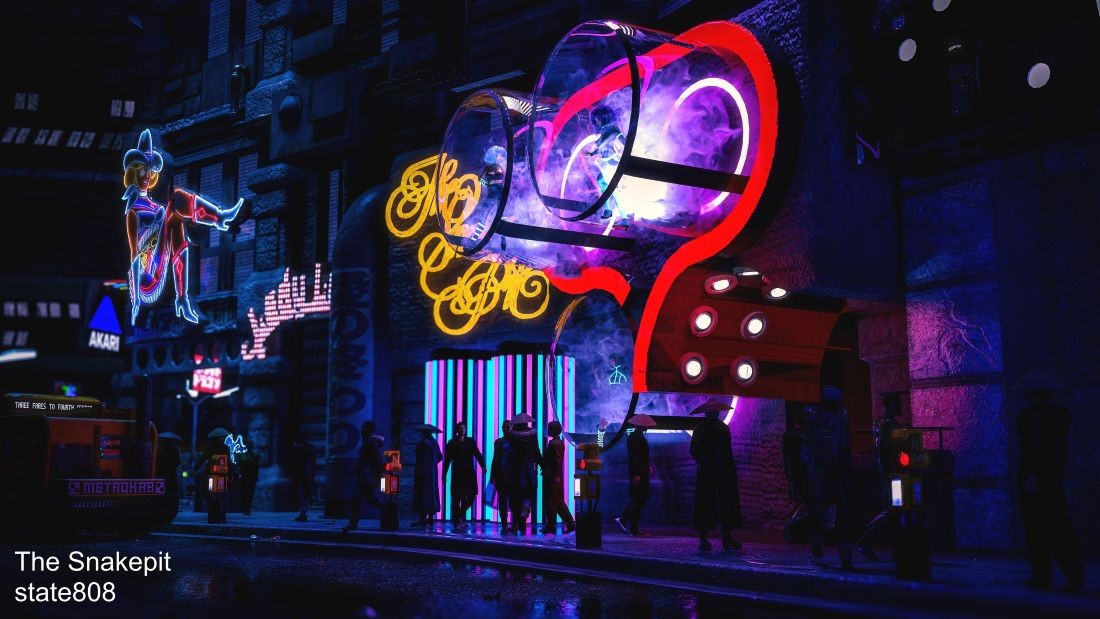
Our members have chosen as Renderosity’s Artist of the Month for February, State808, a 55 year-old artist who joined the community only three years ago. His full username came from his early days in an electronic band whose Roland 808 drum machine was constantly in a bad “state” of chaos…so 808 works just fine, now, thank you.
Ready to get to the questions and answers, we dove right in.
What was your first interest in computers and what did you like doing with them?
I’ve been around since the early days. I had a Commodore 64 at home that I used to make graphics, primitive 8-bit games, and, of course, to play games that could fit on a floppy disk. We even doubled the storage space by using a paper hole punch to cut a notch in the disk and make it two-sided. That kind of hands-on tinkering was my introduction to both computers and creative problem-solving.
How long have you been creating art of any kind and when did you move into computer graphic arts?
I’ve been making art my entire life, and received formal training during my undergraduate studies at a four-year art school, where I earned my BFA. I experimented with computer graphics back then, but the tools were still so primitive that I found them limiting and unsatisfying. My focus at the time was traditional mixed media—oil and acrylic painting, drawing with charcoal and pastel.
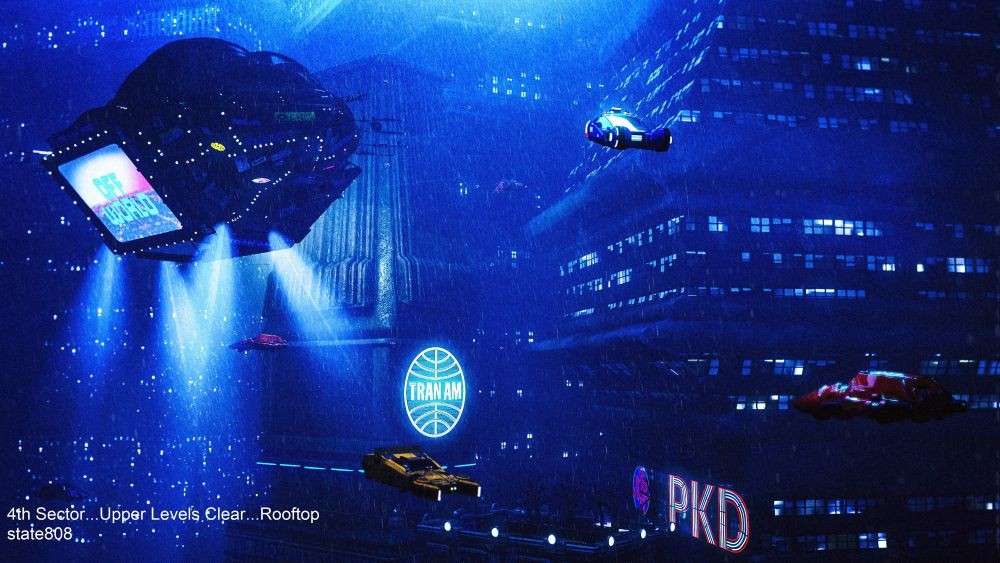
I began this current body of work in the last couple of years while creating my own game mods. I’ve always been a fan of Blade Runner, and I realized that CGI was the perfect medium to pair with that world and aesthetic.
What was the process of moving from learning the tools to creating images you wanted to share with others?
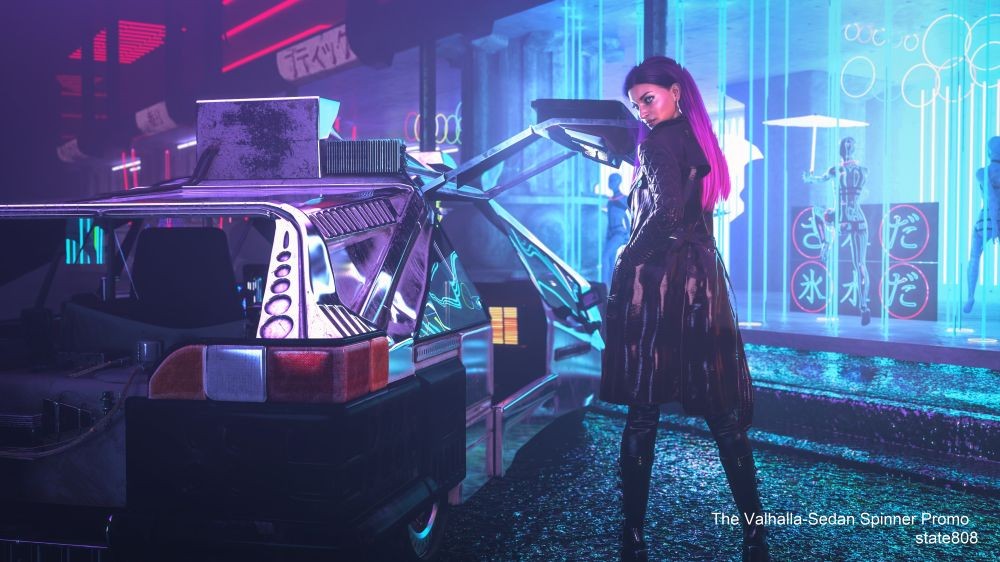
I knew from the beginning that I had a lot to learn and wasn’t familiar with tools like Blender, Substance Painter, or Daz Studio. It made sense to build in a way that constantly pushed me to improve. I chose Blade Runner as my guiding inspiration because I knew that staying faithful to such a visually iconic world would force me to learn the fundamentals properly—modeling, texturing, lighting, and rendering, rather
than cutting corners.
How would you describe your style? Would you say you have a common theme throughout your work?
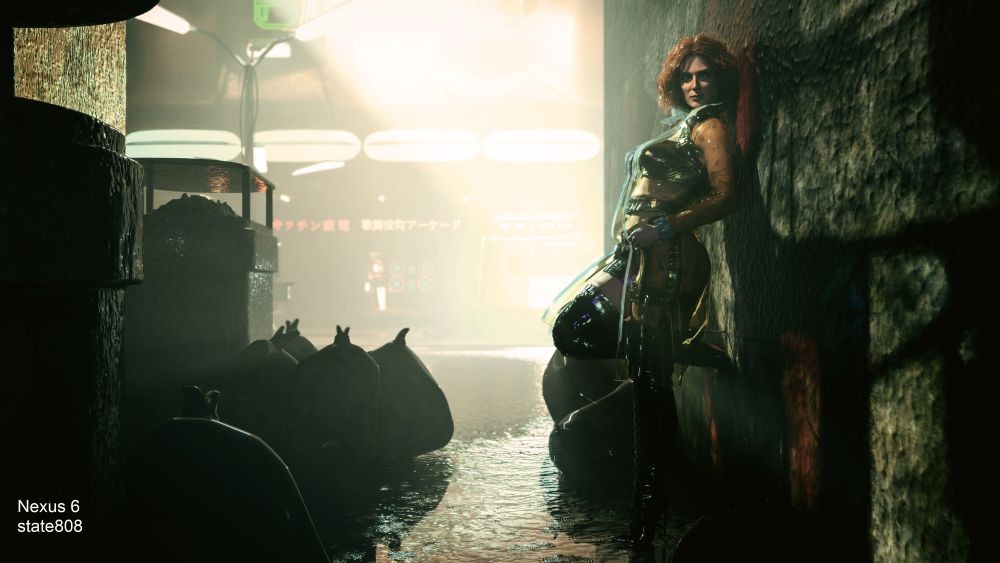
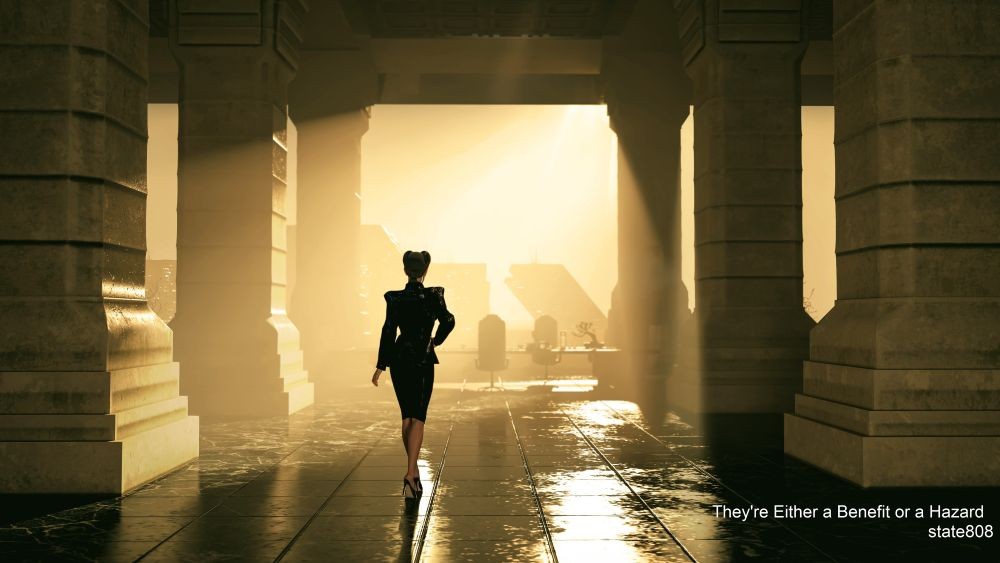
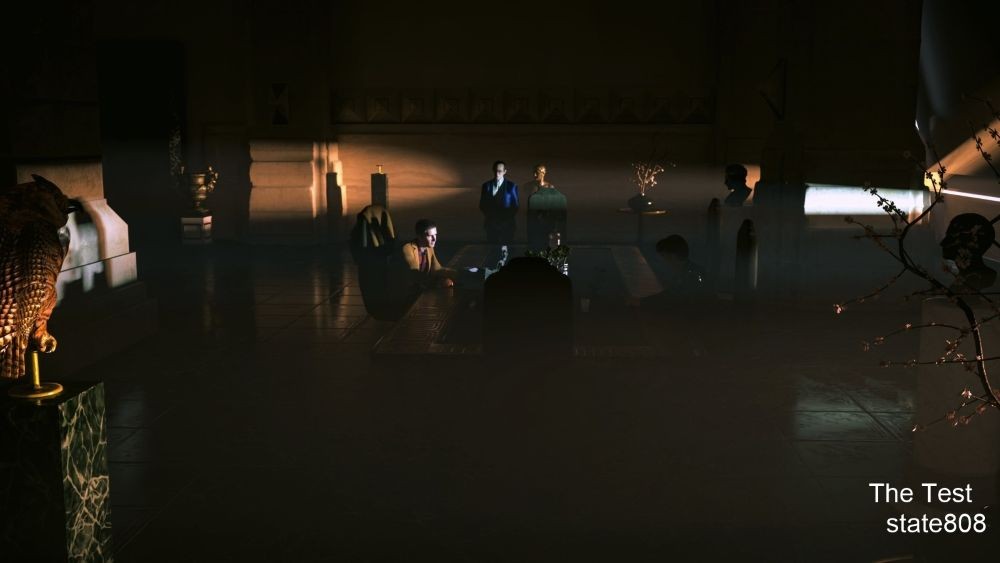
The most consistent thread in my work is the use of light as a primary compositional element. I’m deeply drawn to chiaroscuro and tend to see the world in terms of the patterns and shapes created by light. In that sense, my work is very figural.
What I love about Blade Runner is how much it relies on the interplay of light and darkness to create form and meaning. My goal is to make images that feel cinematic—like moments captured on film—which is why most of my work is presented in a 16:9 format.
In my traditional media practice, my work leans more toward contemporary mixed media and sometimes immersive installation. Over the years I’ve combined painted photographs, medical imagery, and film elements within drawings and sculptural environments.
Where do you find your inspiration?
The patterns created by light, the human figure and anatomy—and currently, Blade Runner.
What are your favorite programs to use now and why?
I really enjoy Blender for its versatility and the sheer range of things it can do. I prefer Daz for rendering, and I’m very interested in learning Unreal Engine next.
How has your work changed over time? Where do you think it’s headed?
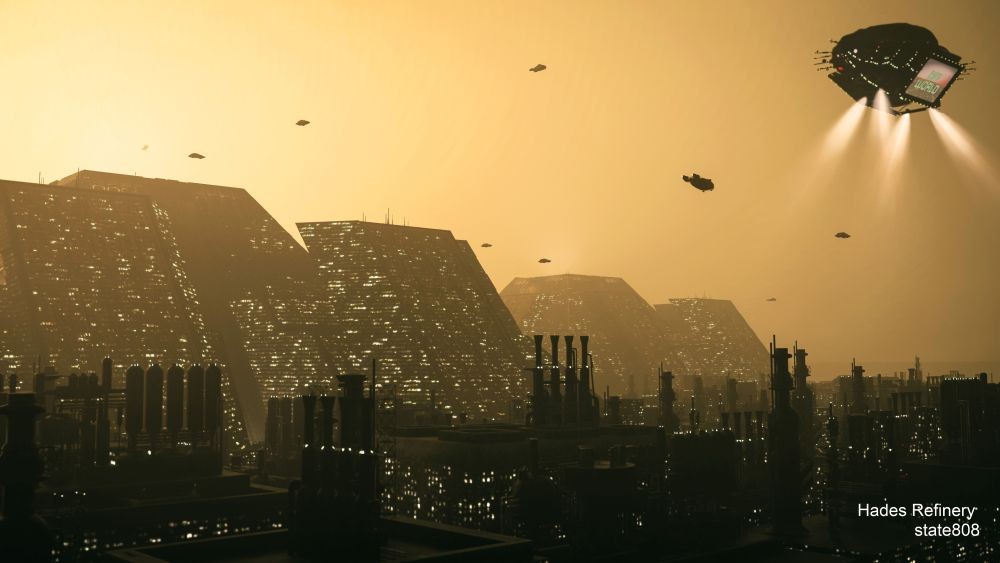
The human figure has always been central to my work, and I expect that to remain constant. Eventually I’ll finish the Blade Runner series and move on. I may explore other established worlds—Alien is a big influence for me—or branch into entirely new concepts.
One idea I keep returning to is combining mixed media with my renders and possibly turning them into installation-based experiences. I’m also interested in building cyberpunk narratives and worlds, including experimenting with urban gangs inspired by cultural traditions of masks and makeup, such as Chinese opera, Kabuki, Inuit, and Native American face paint.
What are your favorite subjects? What do you really get immersed in?
I’m very passionate about film and marine life. I absolutely love cephalopods—they’re extraordinary creatures and inspire a real sense of wonder for me.
With the arrival of AI in digital art, what are your thoughts on its use?
I’m not opposed to AI as a tool, but I don’t believe people should refer to themselves as “AI artists.” To me, it’s similar to ordering a cake from a baker. You can choose ingredients, colors, and even direct how decorations should look—but you didn’t make the cake.
At best, that role is closer to curator or art director. I use AI to help edit writing and to generate alternatives when I’m stuck, such as exploring interface ideas for sci-fi screens. It can be useful for sparking ideas, but the creative responsibility still needs to rest with the artist.
In general, I don’t find most AI-generated art very compelling. Conceptually it’s interesting, but the work itself—at least what I’ve seen—doesn’t feel particularly strong.
If you could have dinner with any artist, living or dead, who would it be and why?
Honestly, I probably wouldn’t. Many artists are difficult people—we tend to be narrow, opinionated, and highly disciplined. That focus is often necessary to produce meaningful work. So, while I deeply admire many artists, I’m not sure I’d actually want to sit down to dinner with them.
Have you had any life experiences that drive your focus in your artwork?
I’ve had a few near-death experiences, and I think they’ve played a significant role in my fascination with light, darkness, and chiaroscuro.
Are there other artists who influence you, or mentors who have helped you along the way?
For this current series, I’ve been heavily influenced by Ridley Scott, Tom Southwell, and Syd Mead—all of whom worked on Blade Runner. More broadly, artists like Jasper Johns, Robert Rauschenberg, Anselm Kiefer, and Joseph Beuys have been important influences. There are many others, but those are some of the core figures for me.
What ideas do you have in mind for future projects?
More cyberpunk storytelling, and hopefully learning Unreal Engine so I can turn my Blade Runner series into a large, explorable simulation. I’m also interested in learning how to create clothing and hair so I can build all the necessary assets myself.
Everything so far has been a steep learning curve, but I’m hopeful I can get there.
What tips do you have for those just getting started in 3D artwork?
Since so much 3D work focuses on figures, I think two areas are critical: anatomy and
lighting.
Many available models aren’t anatomically accurate – things like bone structure, muscle behavior, and facial musculature are often off. Without understanding how the body actually works, figures can look unnatural, especially in facial expressions.
The second major factor is lighting. Studying film lighting was a turning point for me. I could make decent images before, but not exactly what I envisioned. Once I understood lighting more deeply, I could create images intentionally. Lighting is everything – you can make a great model look terrible with poor lighting, and a simple model look incredible with strong lighting.
Is there anything else you’d like to share with members?
One of the best things I’ve done is connect with a small group of people who can genuinely critique my work. I share models and images with them before release, and they help identify flaws and weaknesses I might miss. That process has taught me more than I ever expected.
I also learn a great deal by watching how they work—studying their techniques, experiments, and problem-solving approaches. That kind of shared learning has been incredibly valuable.

Comments