

















Castell Caerdydd by cfulton
Close
Hover over top left image to zoom.
Click anywhere to exit.
Members remain the original copyright holder in all their materials here at Renderosity. Use of any of their material inconsistent with the terms and conditions set forth is prohibited and is considered an infringement of the copyrights of the respective holders unless specially stated otherwise.
No AI - This artwork was created entirely by hand or with traditional digital tools.
Description
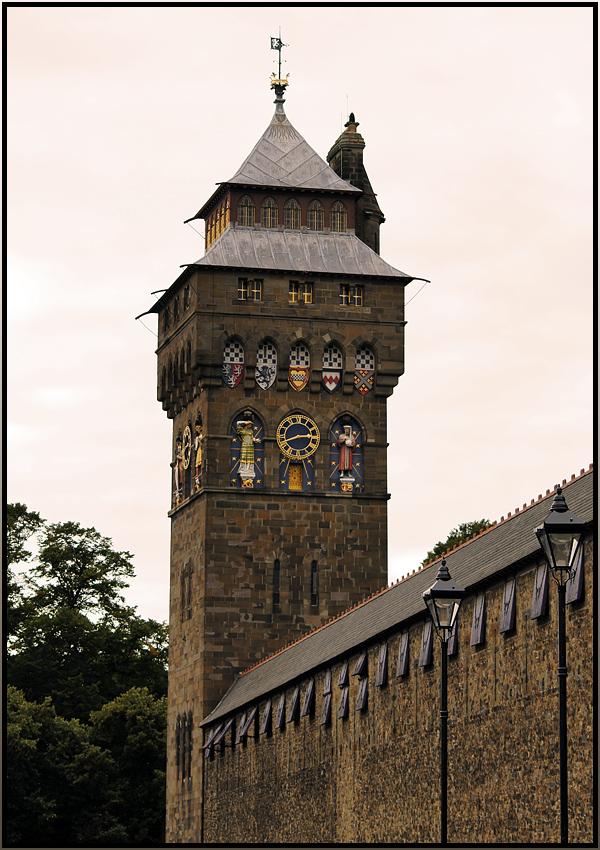
The Clock Tower at Cardiff Castle.
The history of Cardiff Castle stretches over 2000 years. Excavations inside the boundary walls raise the possibility that the Roman legions arrived in the area as early as the first half of the reign of the Emperor Nero (A.D. 54-68).
The Roman occupation of South Wales began following the defeat of the war-like Silures and the exiling of their great leader Caractacus to Rome. Their first fort, built on this strategically important site where the River Taff nears the Bristol Channel, was a campaign base constructed in still-hostile territory. Their defensive works surrounded a ten-acre site on which were built their timber barracks, stores and workshops.
Around A.D. 75, when the Romans controlled the whole of Wales, they rebuilt their Cardiff fort, somewhat smaller than before. The area now occupied by the southern half of the Castle lay outside new perimeter walls and on it rose the workshops of the craftsmen who gathered around any Roman base.
Yet another new fort was built on the site around the year 250 AD. This had 10 foot thick stone walls backed by an earth bank and served until the Roman Army withdrew from the area in the 5th century AD. Its position gave the fort a new strategic importance as a naval base for the protection of the Empire against the menace of sea-bourne attacks by savage raiders from the west and north.
Little is known of the castle during the centuries that followed the Roman departure. Perhaps for long periods, the raiders from the sea made it untenable. The native princes of Glamorgan based themselves about a mile to the north and the ruined fort waited for a new army of occupation.
Here for more.
In the early nineteenth century John Crichton-Stuart, second Marquis of Bute, put in train the last phase of redevelopment of Cardiff Castle. However, it was the third Marquis whose love of architecture (and immense wealth), together with the talents of architect William Burges, developed the Gothic-Victorian fantasy which can be seen today. The 40 metre high clocktower, completed in 1873, was the first result of this collaboration.
I have learned a lot about where I visited today! Just like Jeff, I did not go inside the walls, only got one glimpse through the gate.
Clive

Comments (11)
A brilliant and clear capture Clive.
Nice shot and perfect exposure!
Stunning capture Clive. Thank you for sharing the history regarding this castle. God Bless.
Fantastic capture!!!!
Intriguing. Think a lot of "new work" was done not only here but elsewhere during the 18th and 19th centuries. Such was the case in some of my favorite castles in Germany.
Fantastic capture Clive, I'm with Bill regarding his views.. The Victorians were renown for their 'renovations'! Super POV, well done! Rob
Marvellous! What a super shot! I really must get out more.
Wow!! What a gorgeous capture of this castle, and such great details. Well done!
some wonderful decoration
Wow. That tower is ... words fail me. I love it. WOW!
Excellent capture Great looking tower Hugs Susan~