

















GAF Jindivik A92-47 by blinkings
Close
Hover over top left image to zoom.
Click anywhere to exit.
Members remain the original copyright holder in all their materials here at Renderosity. Use of any of their material inconsistent with the terms and conditions set forth is prohibited and is considered an infringement of the copyrights of the respective holders unless specially stated otherwise.
No AI - This artwork was created entirely by hand or with traditional digital tools.
Description
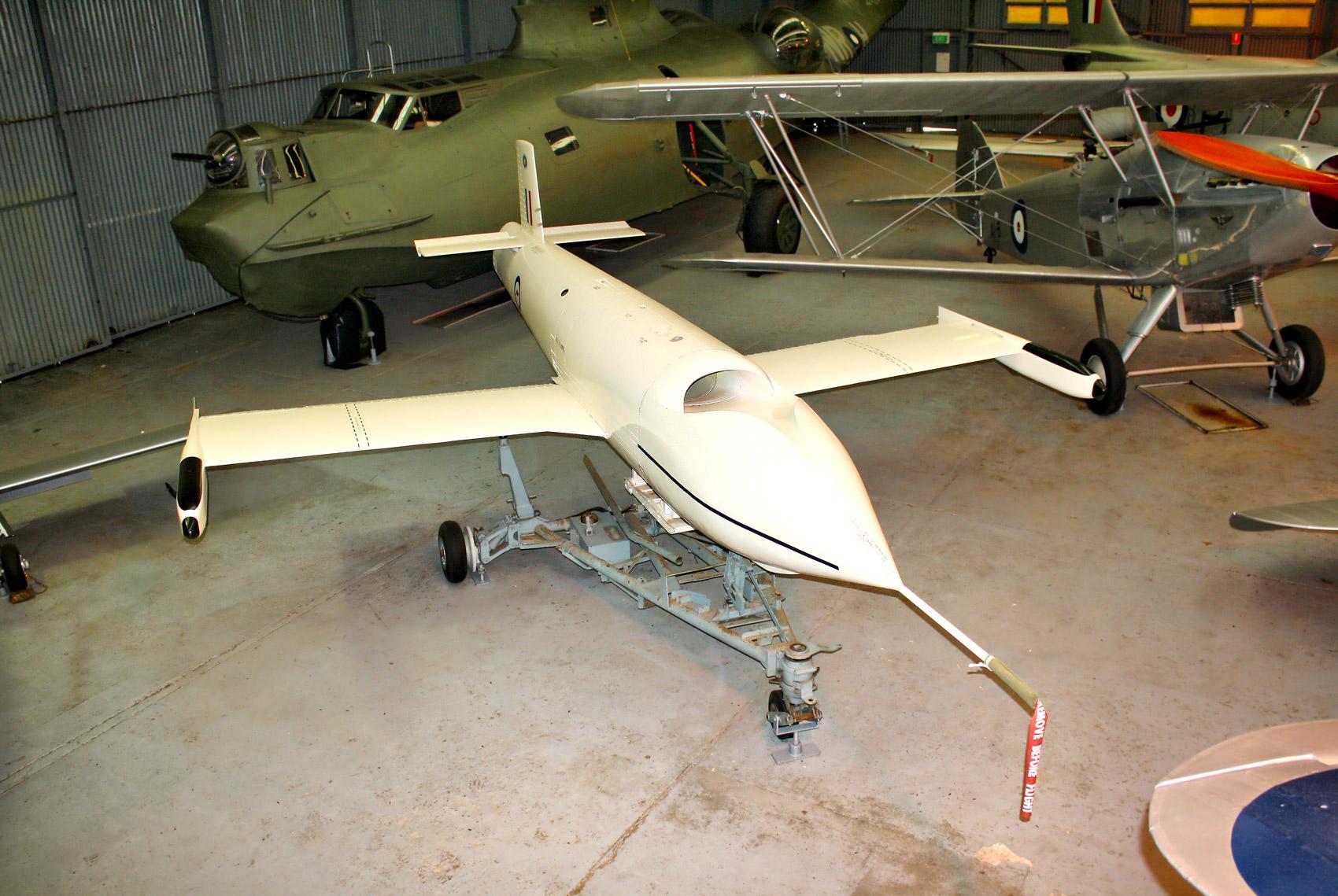
In 1948, the British Ministry of Supply issued a specification for a high-speed pilotless target aircraft for use in guided missile testing. With the majority of this missile development occurring on the Woomera test site, it was decided that the target aircraft would be developed in Australia. Performance specifications shaped the design of the aircraft, and by late in 1950, information gained from the manned Pika allowed construction of the Jindivik prototype to begin. After three attempts, the first flight occurred on 28 August 1952, ending in the loss of the prototype.
Although there were a variety of teething problems with the type, the Jindivik soon proved its worth as a target aircraft, and a number of variants were developed from the basic design. These included more powerful engines, and the provision for extended wingtips for high altitude testing, essential to simulate attack profiles for surface to air missile intercepts. Well over 300 Jindivik aircraft were constructed for use at both Woomera and Jervis Bay in NSW, as well as exports to the USA, United Kingdom and Sweden, making the aircraft the most successful Australian aviation export program, with a total production of over 600 airframes.
Flown by a team of four, the Jindivik utilises a take off trolley, which is linked to the controls of the aircraft and is left on the runway at launch. The aircraft's controls are then handed over from two visual operators to a second pair of 'pilots' who use radar plots and instrument readings to fly the aircraft during its trials. Upon returning to the airfield at the completion of tests, the visual pilots recover the aircraft, which lands on a retractable skid beneath the centre fuselage.
The Jindivik on display is A92-47, an early model of the type which was used for fatigue testing by the Aeronautical Research Laboratories at Fishermens Bend in Melbourne.
The green aircraft behind it is a Catalina, and the silver one is a Hawker Demon. All three are in a storage hanger awaiting permanent display!

Comments (14)
Very cool aircraft and wonderful information
Stunning capture my friend.
Interesting narrative.
great foto, did you know the british, during ww2, trained pigeons (computers where still too heavy at this time, so pigeons where conditioned to tap a screen and head the missle into a ship.) to be used in guided missles like this?
wonderful plane and photo!!
Almost toy-like!
Toys for boys???
very cool. keep an eye open for when that pby5 Catalina goes on display, I look forward to more shots of it
Well, mate another new one to me! I have of course heard of the ranges at Woomera etc and pilotless drones.. Tiger Moths were used during the second war as pilotless aircraft.. They were called 'Queen Bees'. lol True! But great info and a super shot once more! Rob
Cool shot - I love the POV
Great shot, love the contrasts of the different planes-and some very interesting details about his one!!
Fascinating stuff, I'm interested in the 'Cat', the side blisters look bigger than the standard 'teardrop' type...unless it's just the angle.Also the nose turret, is that of Australian manufacture ?.
Great info on this early RPV. Very interesting, Clive
Interesting bit of history that I didn't know about. Good pic and that looks like quite a museum.