
















The ladybug cycle by dochtersions
Close
Hover over top left image to zoom.
Click anywhere to exit.
Members remain the original copyright holder in all their materials here at Renderosity. Use of any of their material inconsistent with the terms and conditions set forth is prohibited and is considered an infringement of the copyrights of the respective holders unless specially stated otherwise.
No AI - This artwork was created entirely by hand or with traditional digital tools.
Description
Dear friends,
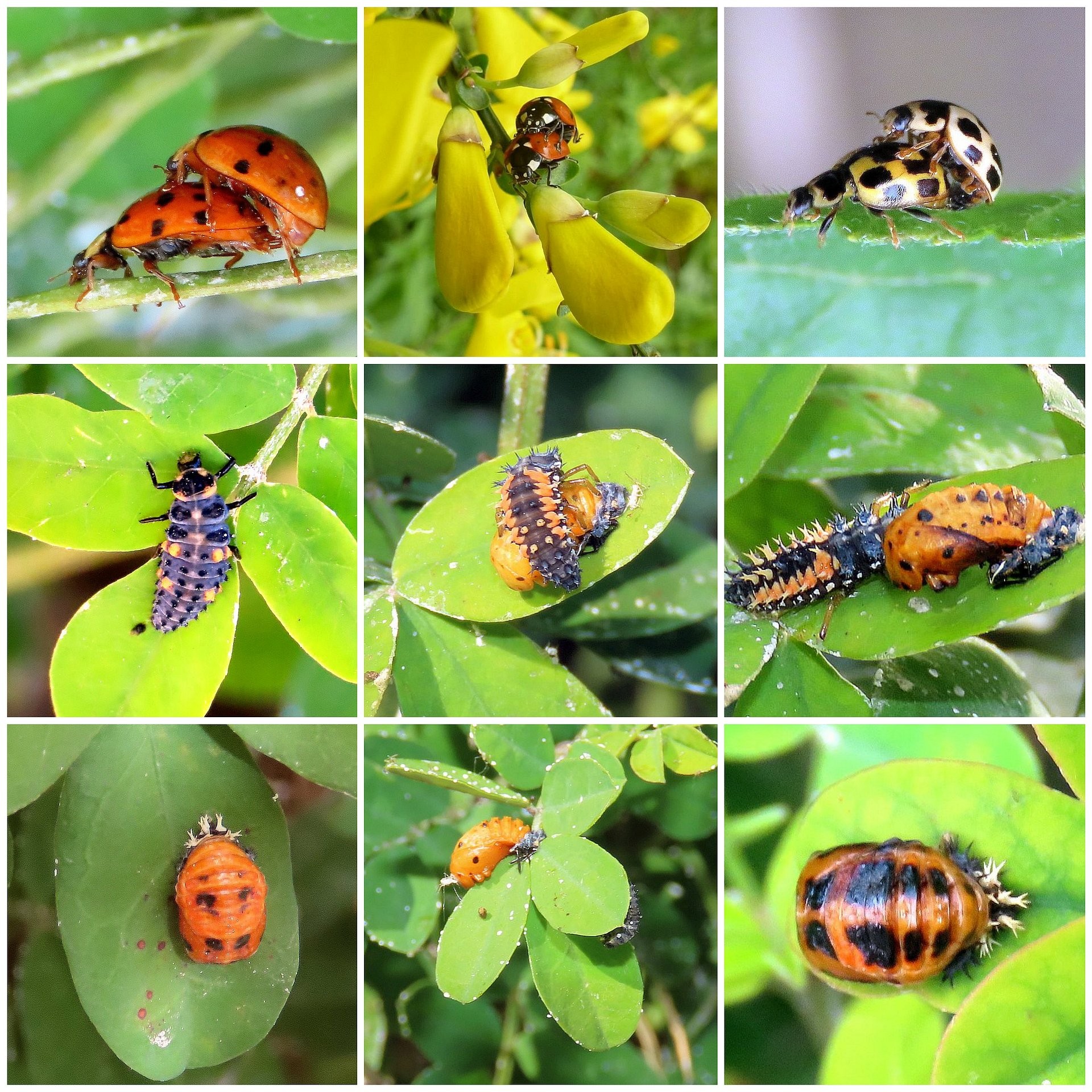
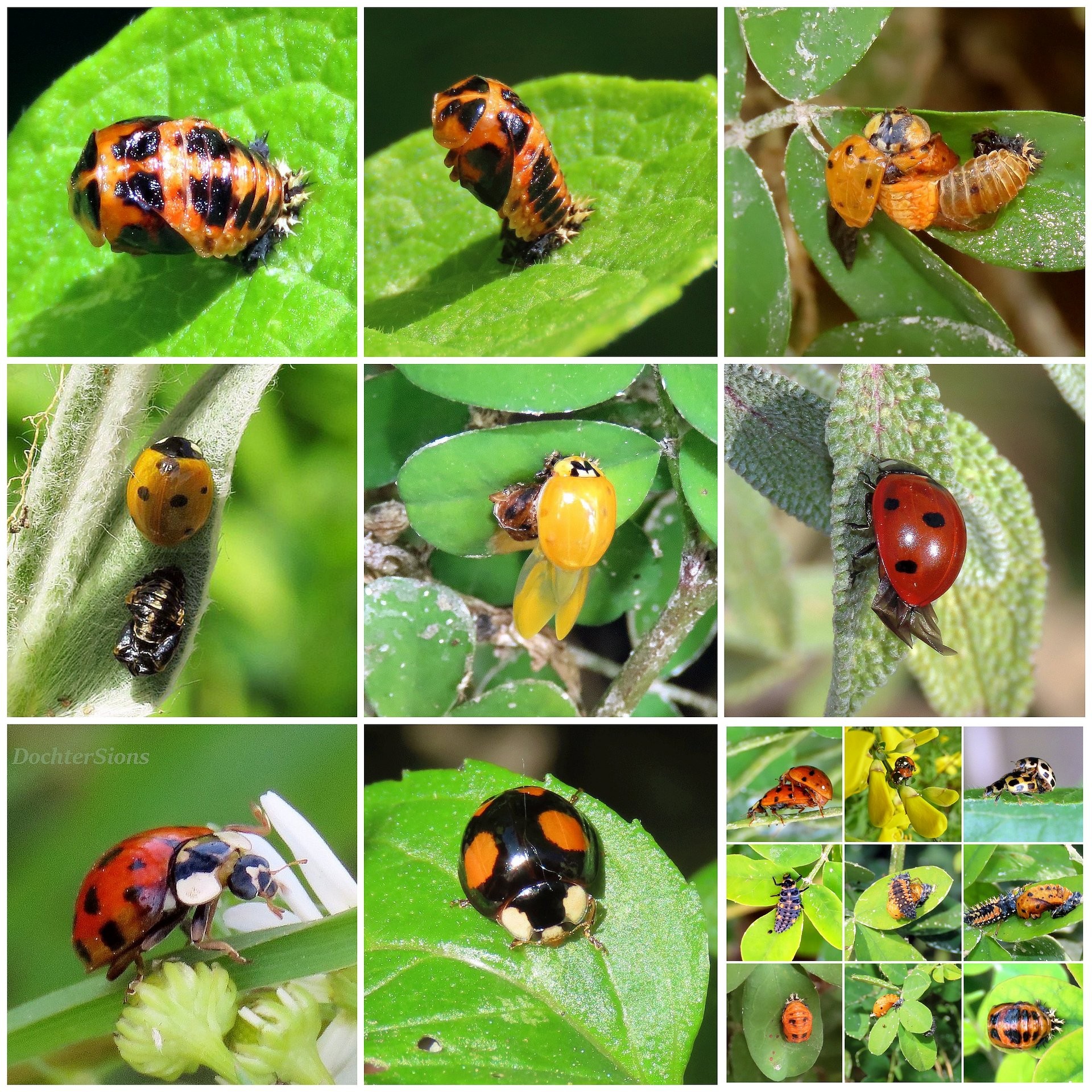
For those who are interested in the origins of a ladybug, I am posting (actually too many) photos here of what I have observed in our garden.
I have tried to put the photos in order, but some show two ladybugs superimposed on each other, which are in different stages of their birth.
What I have observed is that while 'stripping', i.e. getting rid of their last skin, the animal strips off that cocoon by moving up and down.
Then it raises its back into the air and back again, repeating this several times.
In some photos you can clearly see that the cocoon opens at the back and continues to roll down, so then you can already see the back of the 'real' insect.
Full size is recommended!
------------------------------------------------------------------------------------------------------------------
Here more information, and I'm sorry for not have photo's from the eggs.
The egg
In spring (April or May) the female lays small, yellow eggs in groups on the underside of leaves, usually near an aphid colony. The eggs hatch after 2 to 10 days.
The Larva
When the egg hatches, a small larva appears. This one immediately eats its own egg shell. The larva looks nothing like an adult ladybug; it is often dark, spiky and mobile. In this stage, the larva is a huge glutton that feeds on hundreds of aphids to grow quickly.
The Doll
After about three weeks the larva is large enough and attaches to a leaf or stem. The larva turns into a pupa, in which the transformation into an adult ladybug takes place. This takes about one to two weeks.
The Adult Beetle (Adult)
When the chrysalis breaks open, the adult ladybug emerges. In the beginning the shield is still soft and light yellow and has no dots. Within a few hours the shell turns orange or red, the dots appear and the armor hardens.
The adults overwinter and mate in the spring, after which the cycle begins again.
A ladybug lives for about 1 year.
Where does the name come from?
The name 'ladybird' probably dates from the time of the Germanic people. They revered the brightly colored beetle and saw it as a messenger from the goddess Freya. The Germanic name 'Freyafugle' has been Christianized to ladybug.
---------------------------------------------------------------------------------------------------------------------
Thank you very much for your interest, and I hope the photos will provide some clarity.
Love to all of you, Jacomina (Almost stewed).
p.s. Just wait another 2 days and nights, and then the temperatures will be back to normal, but will I also be back to normal then??? ;-)
#photo's, # insects,# macro,
------------------------------------------------------------------------------------------------------------------

Comments (9)
Lovely collage well done
Merci beaucoup, mon ami!
Wonderful set of photos and very informative text!
Thank you very much, my friend.
Excellent photos and very interesting. Also have an invasion of larvas from time to time (maybe asian ladybugs), but never took the time to take pictures
Thank you Henry, we had a lot of aphids on 1 particular bush (the Caragana arborescens), thanks to these insects they have all disappeared.
Een uitzonderlijke combinatie van mooie en interessante natuurfoto's, nog nooit gezien, bedankt lieve Mies om ons te laten meegenieten
Dank je, lieve Etienne! Op onze erwtenstruik (Caragana arborescens) hadden we ontzettend veel luis, dankzij deze beestjes zijn ze nu allemal verdwenen. Wat wil je nog meer, hè? ;-)
De levenscyclus van het lieveheersbeestje een prachtige en uitstekende collage!
Dank je, Chris. Ik heb heel wat staan fotograferen, maar daarna kwam nog het meeste werk (om een selectie te maken). :)
Very well done, my friend!!!
Thank you so much, Gary!
Great ! And thanks for the info !
Thank you very much!
Very interesting! And it's astounding how you find all these for a photo. 😊
Danke dir, Herwig. Ja, Geduld muss man haben, sehr viel Geduld ;-).
Wow! This is really amazing to see and very interesting to learn. Thank you for sharing - and what beautiful photos and dedication to watching and capturing their life cycle!
Thank you so much, dear friend. I really enjoyed being able to study it up close.