
















Common Garden Snail by Ken _Gilliland
Close
Hover over top left image to zoom.
Click anywhere to exit.
Members remain the original copyright holder in all their materials here at Renderosity. Use of any of their material inconsistent with the terms and conditions set forth is prohibited and is considered an infringement of the copyrights of the respective holders unless specially stated otherwise.
No AI - This artwork was created entirely by hand or with traditional digital tools.
Description
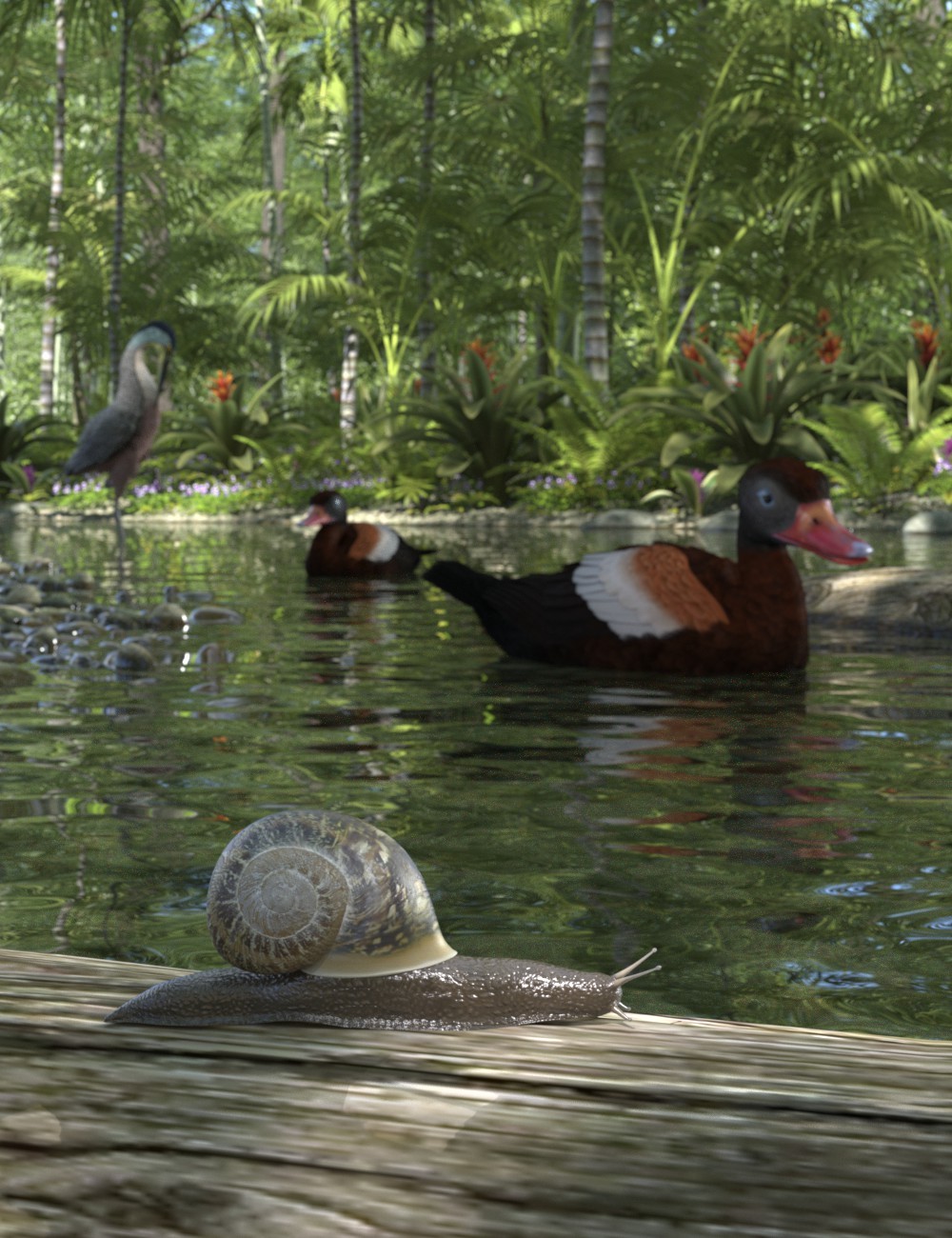
Here's a preview of my next Nature's Wonders release, "Slugs & Snails". It will include two different types of snails (each with two variations), two different types of slugs (each with two variations) and a few props (slime trail, Slug & Snail Repellent). Both the snail and slug models have a "Movement" dial (that goes 0 to 3), that creates some very believable movement for those interested in animation. This set is planned for a late January release.
The Common Garden Snail is native to the Mediterranean region and its present range stretches from northwest Africa and Iberia, eastwards to Asia Minor and Egypt, and northwards to Britain. It also found now in the Americas.
The species is known as an agricultural and garden pest, an edible delicacy, and occasionally a household pet. In French cuisine, it is known as petit gris, and is served for instance in Escargot a la Bordelaise. Also in Lleida, a city of Catalonia (Spain), there is a gastronomic festival called L'Aplec del Caragol dedicated to this type of snail, known as bover, and attracts over 200,000 guests every year. From Crete are known a dish called "chochloi mpoumpouristoi" (snails turned upside down), the snails cooked alive in a hot pan, on a thick layer of sea salt. Other dishes with snails are snails with rosemary, etc. The practice of rearing snails for food is known as heliciculture. For purposes of cultivation, the snails are kept in a dark place in a wired cage with dry straw or dry wood. Coppiced (cut-back to promote growth) wine-grape vines are often used for this purpose. During the rainy period the snails come out of hibernation and release most of their mucus onto the dry wood/straw. The snails are then prepared for cooking. Their texture when cooked is slightly chewy.


Comments (6)
Looks like dinner is served....at least as far as the birds are concerned :)
Superb look to this :)
This is wonderful work!
ein wunderschönes Bild
This is so life like!
Excellent work!
Wonderful work, Ken! I can hardly wait to add these to my runtime. :)