

















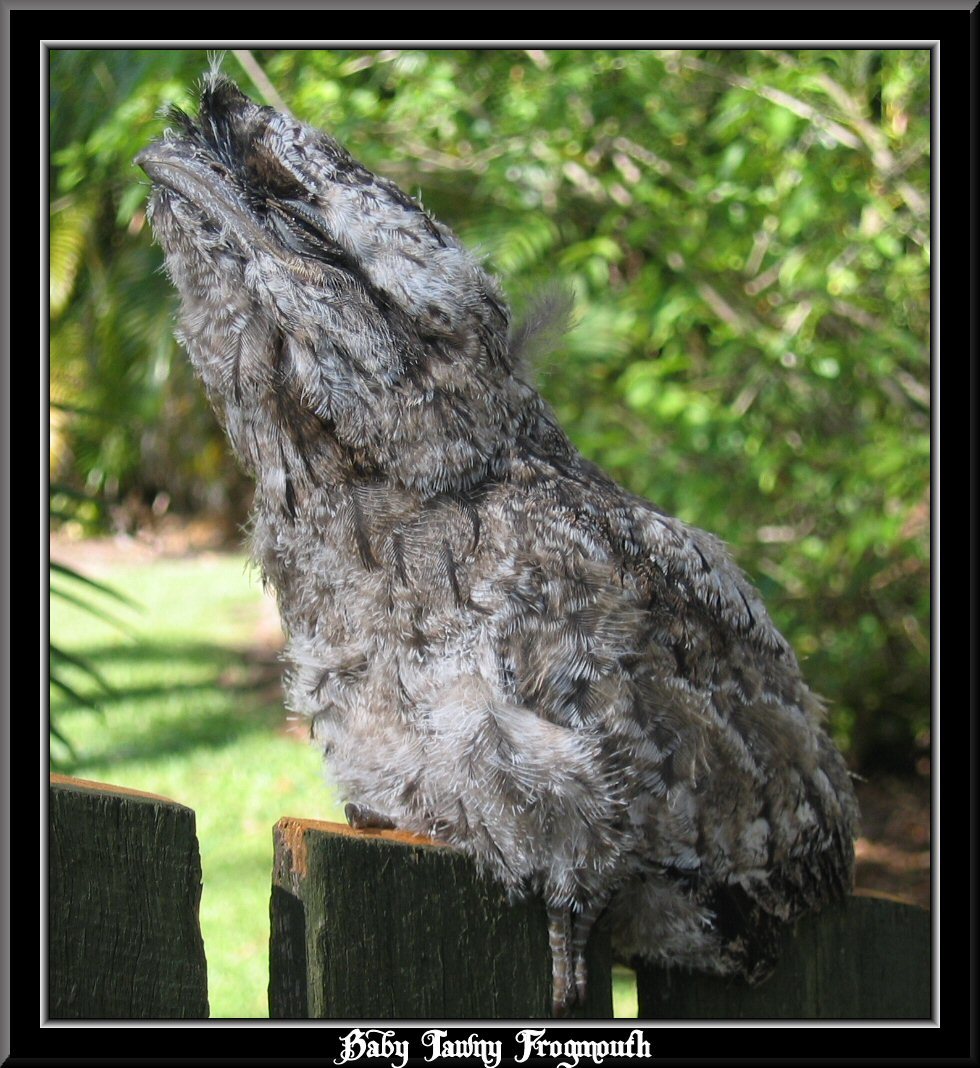
Baby Tawny FrogMouth 2 (With Background Info) by stuart83
Close
Hover over top left image to zoom.
Click anywhere to exit.
Members remain the original copyright holder in all their materials here at Renderosity. Use of any of their material inconsistent with the terms and conditions set forth is prohibited and is considered an infringement of the copyrights of the respective holders unless specially stated otherwise.
No AI - This artwork was created entirely by hand or with traditional digital tools.
Description
Just a Little background about the Tawny Frogmouth.
The Tawny Frogmouth is often thought to be a species of owl, but they are in fact related to nightjars. They do not have the strong talons (claws) of owls. There are 14 species, or types, of frogmouth. Tawny Frogmouths are commonly seen throughout Australia, but not in rainforests or deserts. They prefer open eucalyptus woodland.
Males and females look alike, and are 35-50 cm long.They have yellow eyes and a wide beak topped with a tuft of bristly feathers. They make loud clacking sounds with their beaks and their call sounds like drumbeats.
Owls fly around at night hunting food, but Tawny Frogmouths generally remain sitting very still on a low perch, and wait for food to come to them. They catch prey with their beaks, and sometimes drop from their perch onto the prey on the ground.
Tawny frogmouths hunt at night and spend the day roosting on a dead log or tree branch close to the tree trunk. Their camouflage is excellent - staying very still and upright, they look just like part of the branch. The tawny frogmouth feeds on rats, mice, cicadas, beetles, frogs and other small prey. They catch their prey with their beaks rather than with their talons, another way in which they are different from owls.
Tawny frogmouth pairs stay together until one of the pair dies. They breed from August to December. They usually use the same nest each year, and must make repairs to their loose, untidy platforms of sticks. After mating with the male, the female lays two or three eggs onto a lining of green leaves in the nest. Both male and female take turns sitting on the eggs to incubate them until they hatch about 30 days later. Both parents help feed the chicks.The chicks move to the edge of the nest and direct their droppings over the edge. About 25 days after hatching, the chicks are ready to leave the nest and lead their own lives.
This should have been the fisrt upload, as you can see this is how you would find them sitting in a gum tree, so they would be very hard to make out against the bark of a tree branch.
Thanks for your comments.
Stuart.

Comments (9)
Yesss...I thought You have another shot of this beauty! I love them, one of my favorite bird (after the wedged tail eagle).many thanks to share this shot with us!
Poor littel one :-)))nice short erland
Looks like he is trying to stretch out the kinks in his back lol. Another great capture here mate! Well done....
What the...??? What is that thing? Is that a bird? Looks like a big chunk of feathers....would probably serve pretty good as a pillow, lol. Fascinating capture of very high quality. Have a great day. #:o)
He looks like I feel right now...lol... Once again lovely clean crisp capture. Your exposure is brilliant, well done :)
Hard to believe this is a BIRD! Never seen anything like it....Great shot!
Thought from the thumb it was a gator trying to jump the fence! I cannot believe this is a bird. Wonderful shot. Thanks for sharing. BJ
Davvero splendida!
I have seen pics of this strange(strange to me) bird before but your photo is much better done and presented. Thanks for the excellent photo and the information which only adds to my enjoyment of the image.