
















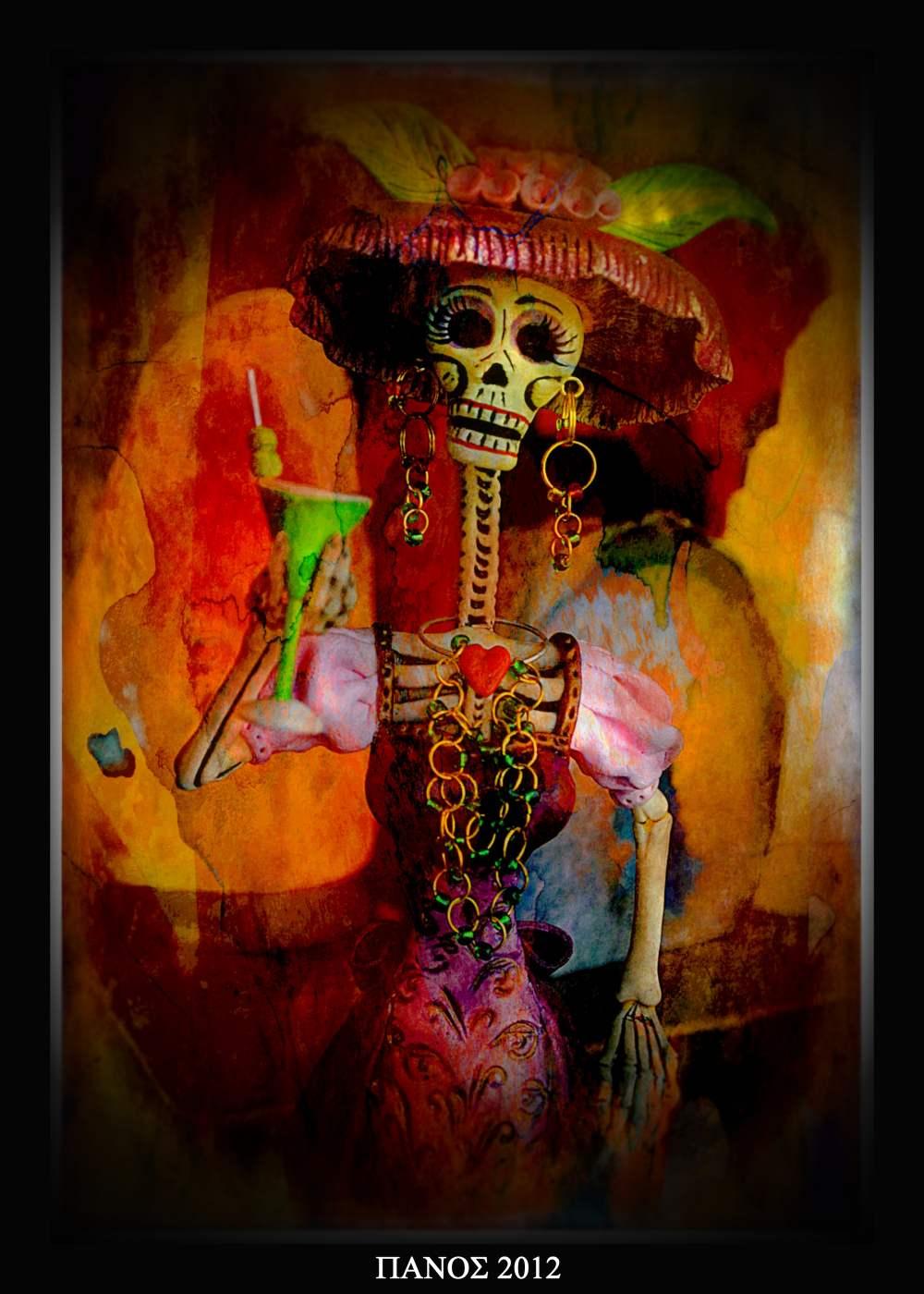
And with a cocktail in hand. by costapanos
Close
Hover over top left image to zoom.
Click anywhere to exit.
Members remain the original copyright holder in all their materials here at Renderosity. Use of any of their material inconsistent with the terms and conditions set forth is prohibited and is considered an infringement of the copyrights of the respective holders unless specially stated otherwise.
No AI - This artwork was created entirely by hand or with traditional digital tools.
Description
A beloved figurine from Dia de los Muertos
La Catrina with a cocktail in hand.
Born of revolution
La Catrina as we know her originated with Jose Guadalupe Posada, considered the father of Mexican printmaking. Born in 1852, he apprenticed to a local printmaker and publisher when he was just 14. Moving to Mexico City in 1888, he soon became the chief artist for Antonio Vanegas Arroyo, publisher of illustrated broadsides, street gazettes, chapbooks and other popular forms of literature, including songbooks for the popular corridos. He became famous for calaveras (skulls or skeletons) images that he wielded as political and social satire, poking fun at every imaginable human folly. His influence on Diego Rivera, Jose Clemente Orozco and other great artists of their generation was incalculable.
La Catrina isn't your typical revolutionary babe, but her appearance has everything to do with the Mexican Revolution. Posada's working life paralleled the reign of dictator Porfirio Díaz, whose accomplishments in modernizing and bringing financial stability to Mexico pale against his government's repression, corruption, extravagance and obsession with all things European. Concentration of fantastic wealth in the hands of the privileged few brewed discontent in the hearts of the suffering many, leading to the 1910 rebellion that toppled Diaz in 1911 and became the Mexican Revolution.
Posada's illustrations brought the stories of the day to the illiterate majority of impoverished Mexicans, both expressing and spreading the prevailing disdain for Porfirio's regime. The image now called "La Calavera Catrina" was published as a broadside in 1910, just as the revolution was picking up steam. Posada's calaveras — La Catrina above all, caricaturizing a high-society lady as a skeleton wearing only a fancy French-style hat — became a sort of satirical obituary for the privileged class. But his Catrina cast a wider net: His original name for her, "La Calavera Garbancera," used a term that in his day referred to native Mexicans who scorned their culture and tried to pass as European.

Comments (1)
This gives me intimations of my future! What a wonderful object!