













Dialogues on Philosophy: Anaximander by doriano

Close
Hover over top left image to zoom.
Click anywhere to exit.
Members remain the original copyright holder in all their materials here at Renderosity. Use of any of their material inconsistent with the terms and conditions set forth is prohibited and is considered an infringement of the copyrights of the respective holders unless specially stated otherwise.
No AI - This artwork was created entirely by hand or with traditional digital tools.
Description
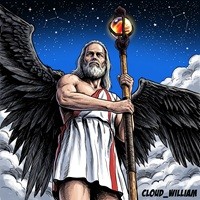
Anaximander (c.610—546 BCE)
Anaximander was the author of the first surviving lines of Western philosophy. He speculated and argued about “the Boundless” as the origin of all that is. He also worked on the fields of what we now call geography and biology. Moreover, Anaximander was the first speculative astronomer. He originated the world-picture of the open universe, which replaced the closed universe of the celestial vault.
First Principle for Anaximander is the Boundless (APEYRON), in which it is argued that the Boundless has no origin, because it is itself the origin. We would say that it looks more like a string of associations and word-plays than like a formal argument. It runs as follows: “Everything has an origin or is an origin. The Boundless has no origin. For then it would have a limit. Moreover, it is both unborn and immortal, being a kind of origin. For that which has become has also, necessarily, an end, and there is a termination to every process of destruction” (Physics 203b6-10, DK 12A15). The Greeks were familiar with the idea of the immortal Homeric gods. Anaximander added two distinctive features to the concept of divinity: his Boundless is an impersonal something (or “nature,” the Greek word is “phusis”), and it is not only immortal but also unborn. However, perhaps not Anaximander, but Thales should be credited with this new idea. Diogenes Laërtius ascribes to Thales the aphorism: “What is the divine? That which has no origin and no end” (DK 11A1 (36)). Similar arguments, within different contexts, are used by Melissus (DK 30B2[9]) and Plato (Phaedrus 245d1-6).

Comments (16)
More beauties. Gorgeous lighting. Corrie
Astounding work!
Thales built on the works of earlier 'lost' thinking. The survival of the idea is all===and nothing, because the conclusions are the same. Some of Anaximander's thoughts may well have come from the East.
Beautiful Fractals!
Lovely Fracs & thanks for the info
Fabulous and dreamy imagination!!!
Excellent and very creative realization.....!!!!!!
Nice selection!
Great images my friend!!!! Hugs:)
Excellent work!!!!!
beau travail!!
Fantastic work, It looks beautiful!
SUPER TERRIFIC IMAGE!
excellent images awesome story-line and beautiful coloring!:)*5
Fantastic and beautiful work.
As always beautiful fractal artwork....excellent done.