


















A Small Reconnaissance Aircraft 2/3 by marcPoser
Close
Hover over top left image to zoom.
Click anywhere to exit.
Members remain the original copyright holder in all their materials here at Renderosity. Use of any of their material inconsistent with the terms and conditions set forth is prohibited and is considered an infringement of the copyrights of the respective holders unless specially stated otherwise.
No AI - This artwork was created entirely by hand or with traditional digital tools.
Description
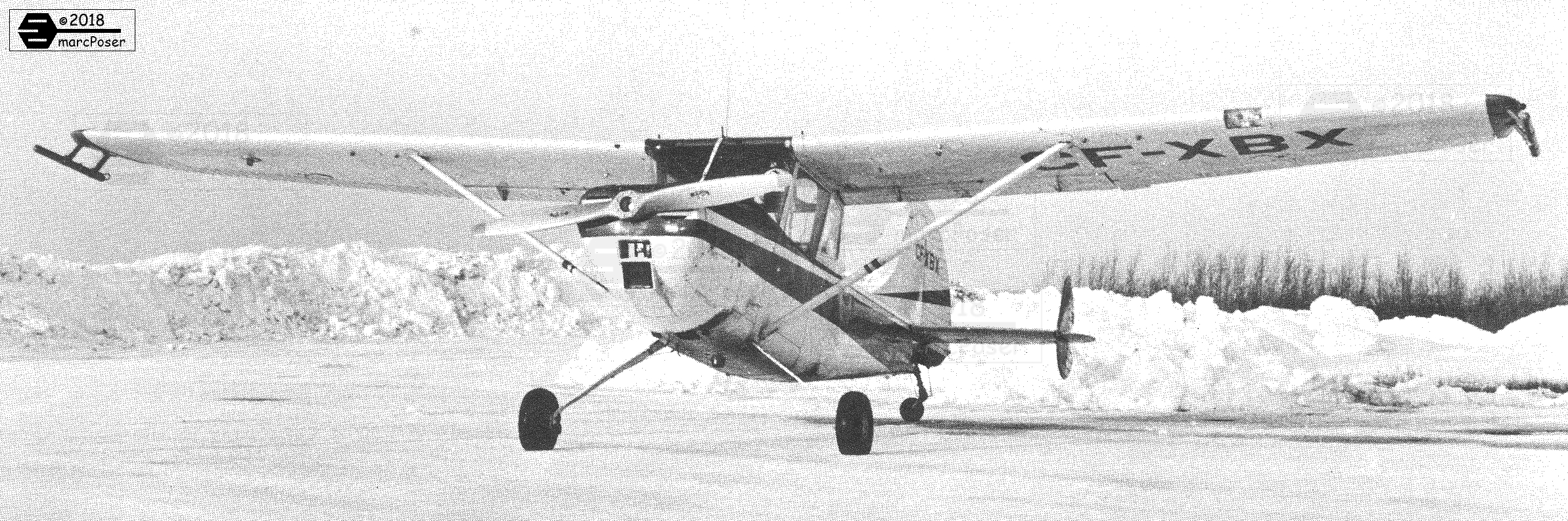
A day, my boss consulted me about the possibility of using a much smaller aircraft that can carry electromagnetic (EM) sensors for detecting electrical conductive formations (ECM). The current airborne EM sensors were useful for reconnaissance survey; an activity that is done at the strategic (early) phase of a mining exploration campaign, usually 1 or 2 years before exploring on the surface. He wanted to do tactical mining exploration that integrate quick airborne exploration in tandem with a surface exploration team. He planned to use a Cessna L19 (also known as O-1 Bird Dog). This quite small aircraft has only 2 seats in a row : the pilot seat and the mission specialist seat that is located behind the pilot seat. My boss was a genius; I was excited about his idea.
Such aircraft was used for surveillance (spying) and indoctrination activities during the Vietnam War; it is small, but equipped with an oversized engine. You know, if you see the enemy sending an RPG towards you, you better climb-up as fast as possible. Since the area of exploration were mountainous, the aircraft need to climb reliably the mountain slopes. I was on that aircraft during the testing and debugging phases; I am not that brave and I was shivering during every flight with that aircraft, especially when we were climbing along a jaggy slope at low altitude during a partially cloudy day or during a windy day. I found out that following down the slope was even more frightening.
I modified and adapted a portable EM sensor on the aircraft, under the supervision of my boss and of an aeronautic engineer. We end up with a light version of an airborne EM sensors, as shown in the picture above. The sensors look-like fat sticks affixed at the tip of the wings. It looks simple, but it is not.

Comments (1)
Excellent