












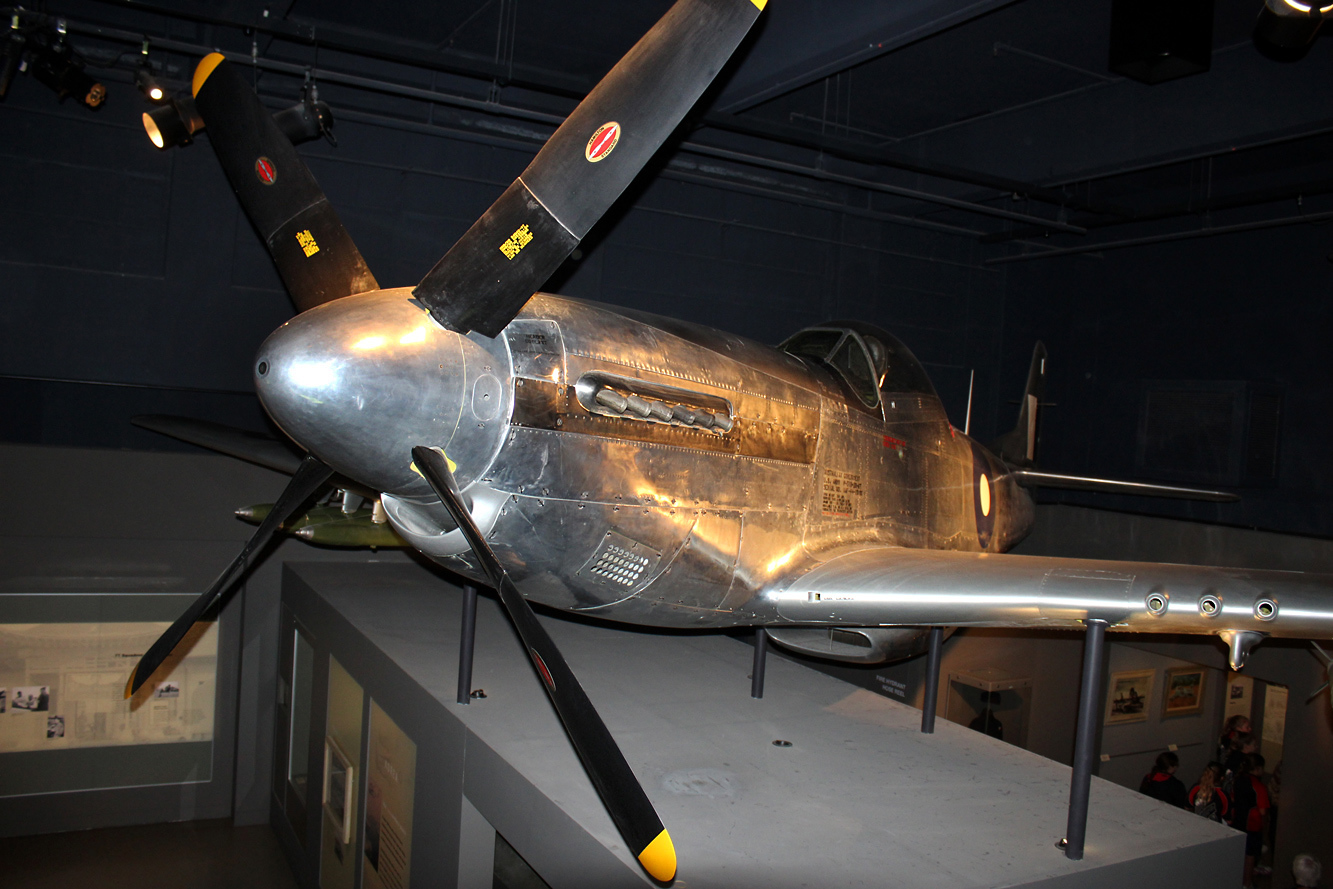
North American P51 Mustang by blinkings
Close
Hover over top left image to zoom.
Click anywhere to exit.
Members remain the original copyright holder in all their materials here at Renderosity. Use of any of their material inconsistent with the terms and conditions set forth is prohibited and is considered an infringement of the copyrights of the respective holders unless specially stated otherwise.
No AI - This artwork was created entirely by hand or with traditional digital tools.
Description
The Mustang is widely regarded as the most successful fighter aircraft of the Second World War. Developed to meet an urgent British request for fighter aircraft, the prototype first flew on 26 October 1940. It was rushed into production and entered service with the Royal Air Force (RAF) in October 1941, but poor performance saw it relegated to a low-level ground-support role. In an attempt to solve the Mustang's performance problems, prototypes fitted with Rolls-Royce Merlin engines were developed in late 1942. The result was an aircraft of superior, long-range, high-altitude performance that was ordered in large numbers by the RAF (as the Mustang III) and the USAAF (as the P-51B and P-51C); these began entering service in June 1943. Further design refinements in late 1943 resulted in the Mustang IV/P-51D and P-51K, which featured a distinctive "teardrop" canopy. 3 Squadron RAAF began operating a mixture of Mustang IIIs and IVs in Italy in November 1944, and 450 Squadron (its sister squadron) was in the process of re-equipping with Mustang IVs when the war ended. In the meantime, a decision had been taken to procure 690 Mustangs for the RAAF in the South-West Pacific, the bulk of which would be locally produced. Ultimately, 298 US-built P-51D and P-51K models were acquired and 200 P-51Ds were built by the Commonwealth Aircraft Corporation as the CA-17 and CA-18; Australian production ceased in August 1951. Overall, 15,576 Mustangs were produced across the world. The Second World War ended before the RAAF could employ the Mustang operationally, but it was used extensively by 77 Squadron RAAF in a ground-attack role in the early months of the Korean War. After serving with 15 RAAF squadrons - 3, 4, 21, 22, 23, 24, 25, 75, 76, 77, 78, 82, 84, 86, and 450 - the last Australian Mustangs were retired in June 1960.

Comments (12)
WOW! you really capture this beautifully
This is a very beautiful and very nice!
...Overall, 15,576 Mustangs were produced across the world....
And so few remain up today. :-( This is truly one of my favorite Warbirds. It hurts me even today, when I think that Switzerland had about 130 P-51D acquired from the USAAF after the war for just a few tousand dollars a piece and after about 10 years of service they where retired. Most of them where then scraped or put on shooting ranges, where they shot with the Vampire and Venom Fighters on them for ground attack training. What a shame!! Many collectors would pay millions for those planes nowaday...
Wonderful capture and interesting history
Cool shot :D
Beautiful airplane !
Superb capture my friend. We still still have one flying at some air shows in South Africa. Mustang Sally God bless.
WHat a fabulous plane... I love it a lot... Marvelous capture also !!!
Love it!
Beautiful photo. And thanks for the history! I didn't know they were in Australia, too, and even manufactured there! Keep up the good work! :-)
stuck in time. great capture. a pilot died today in Atlanta at an air show when he crashed
When I was a kid the air force of my country had Mustangs and corsairs. I loved go to the airport with my uncle to see them fly.