
















Happy Mother's Day by photosynthesis
Close
Hover over top left image to zoom.
Click anywhere to exit.
Members remain the original copyright holder in all their materials here at Renderosity. Use of any of their material inconsistent with the terms and conditions set forth is prohibited and is considered an infringement of the copyrights of the respective holders unless specially stated otherwise.
No AI - This artwork was created entirely by hand or with traditional digital tools.
Description
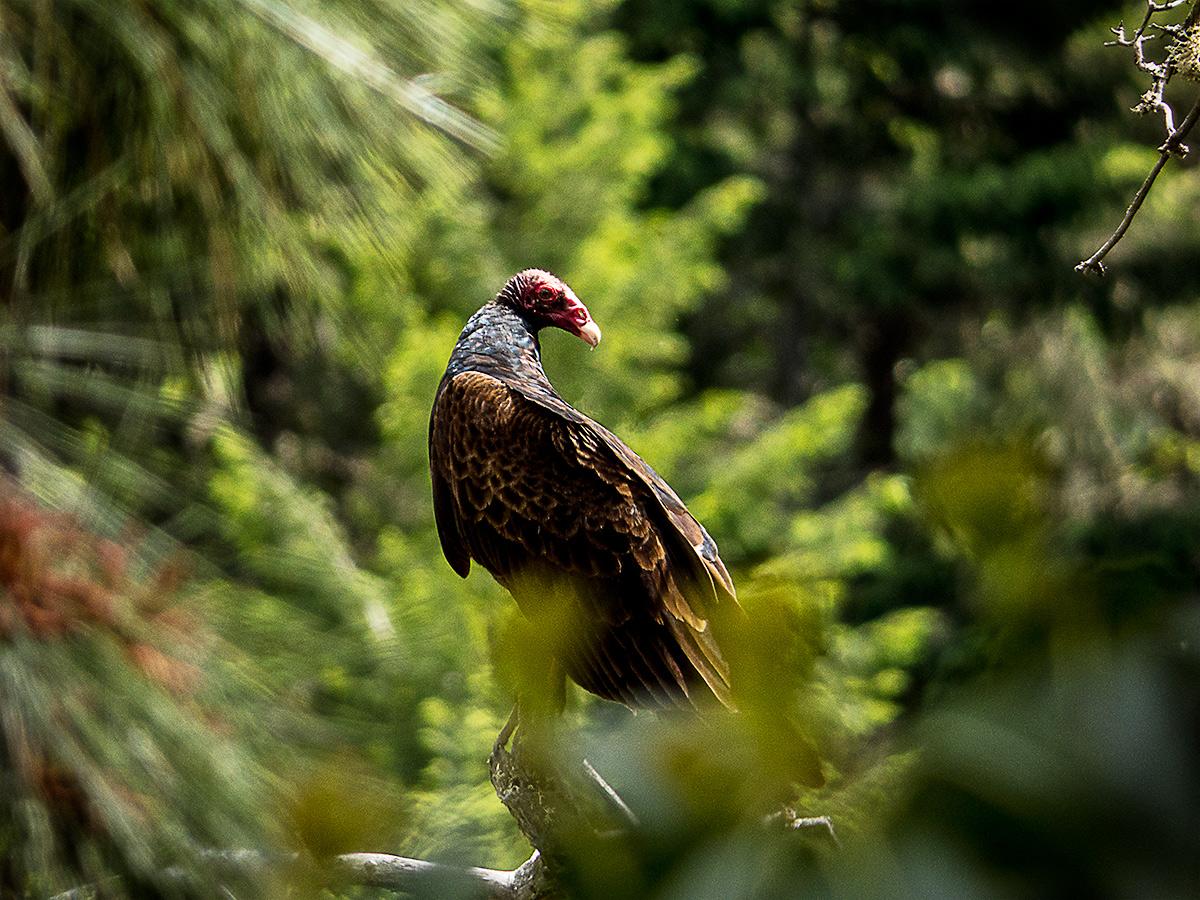
OK, clearly I didn't spend a lot of time trying to find an appropriate photo for Mother's Day. But maybe this turkey vulture is someone's mother? Or perhaps this is a face only a mother could love? It's a stretch, but I do wish all the mothers out there a great day - you deserve it!
Anyway, I was driving home yesterday when I saw two turkey vultures standing by the side of the road. I pulled over to take a photo, but they immediately flew off. Fortunately, one of them flew into a tree on the other side of the road & I had a pretty clear shot through an opening in the branches...
And here's some interesting information about turkey vultures from Wikipedia:
"The Turkey Vulture (Cathartes aura), also known in some North American regions as the turkey buzzard (or just buzzard), and in some areas of the Caribbean as the John crow or carrion crow, is the most widespread of the New World vultures. One of three species in the genus Cathartes, in the family Cathartidae, the Turkey Vulture ranges from southern Canada to the southernmost tip of South America. It inhabits a variety of open and semi-open areas, including subtropical forests, shrublands, pastures, and deserts.
It, like all New World vultures, is not related to the Old World vultures of Europe, Africa, and Asia. It looks nearly identical because of convergent evolution, where natural selection similarly shapes unrelated animals adapting to the same conditions.
The Turkey Vulture is a scavenger and feeds almost exclusively on carrion. It finds its food using its keen eyes and sense of smell, flying low enough to detect the gases produced by the beginnings of the process of decay in dead animals. In flight, it uses thermals to move through the air, flapping its wings infrequently. It roosts in large community groups. Lacking a syrinx�the vocal organ of birds�its only vocalizations are grunts or low hisses. It nests in caves, hollow trees, or thickets. Each year it generally raises two chicks, which it feeds by regurgitation. It has very few natural predators. In the United States, the vulture receives legal protection under the Migratory Bird Treaty Act of 1918."
Please zoom

Comments (8)
This is a pretty spectacular shot! Great focus and dof, and your subject is nicely separated from its background by color, as well. (I know you didn't put the bird there against all that green, but still ... it worked out beautifully!) I love seeing its markings and coloring. We saw a lot of turkey vultures while we were in Texas, but never so close. Terrific photography!
Wow, impressive capture of this bird; I don't find them ugly at all. You did well!
Good capture.
Beautiful capture.
Fabulous capture - they are interesting
great capture erland
Excellent photo!
Actually a good looking photo of this vulture! I did enjoy the zoom.