















A Santos by costapanos
Close
Hover over top left image to zoom.
Click anywhere to exit.
Members remain the original copyright holder in all their materials here at Renderosity. Use of any of their material inconsistent with the terms and conditions set forth is prohibited and is considered an infringement of the copyrights of the respective holders unless specially stated otherwise.
No AI - This artwork was created entirely by hand or with traditional digital tools.
Description
Thank you for stopping by and taking a peek.
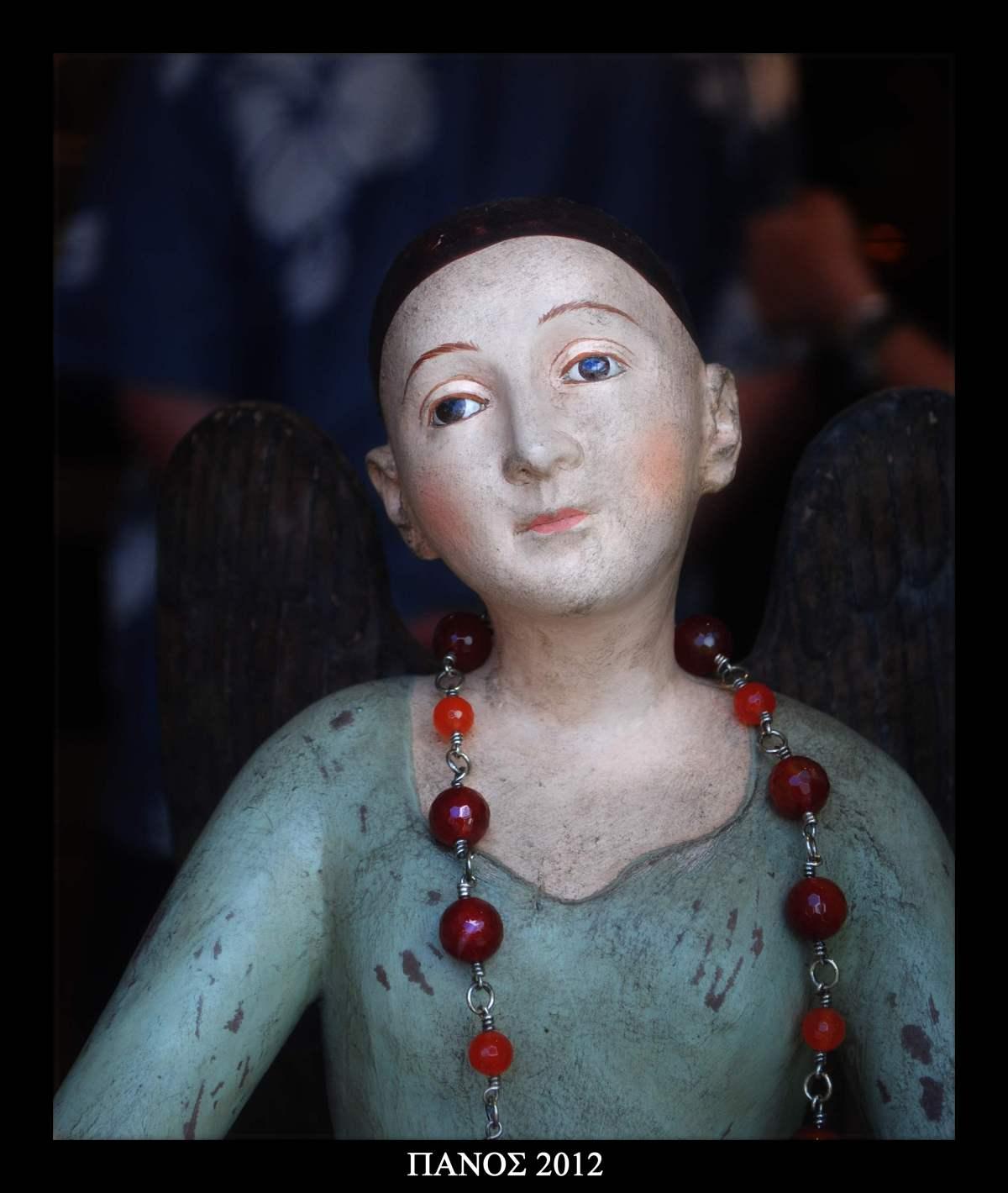
Walking through the historic part of Santa Fe. I was just enthralled with the window displays. With all the turquoise/Native American Indian artwork sprinkled throughout the downtown area. It was also sprinkled with The Santos. All shapes and sizes.
Santo (from the Spanish word meaning "saint") is a traditional New Mexican genre of religious sculpture. The word "santo" is also used to refer to individual works in this genre. Santos are carvings, either in wood or ivory, that depict saints, angels, or other religious figures.
Icons and other religious images were crucial for the conversion of indigenous peoples to Roman Catholicism, which was itself an integral part of the Spanish colonization of the Americas. However, long distances, inefficient methods of transportation, and high demand for such artworks limited the ability of ecclesiastical authorities to supply parish churches, especially those in remote outposts, with works of religious art from Spain.
The first santos are thought to have been imitations of Spanish Baroque statues carved by priests. Later santos were influenced by native styles. They became popular items of devotion, found from home altars to churches, whence they sometimes attracted pilgrims.
Originally common throughout Latin America and the Caribbean, the tradition of santo carving was preserved as a folk art in Northern New Mexico, whose isolated villages remain secluded to this day. Of particular note is the village of Cordova which has produced several well known santeros (carvers of santos), including George López who was awarded the National Heritage Fellowship by the National Endowment for the Arts in 1982.
Santos carved in the round are commonly known as bultos. They are usually carved from cottonwood root, pine or aspen. A santero carves a bulto with a knife and then covers it with gesso, a mixture of native gypsum and glue, to prepare it for painting. Some contemporary santeros still use paints from homemade pigments

Comments (6)
Good heavens, what was I thinking? I saw the thumb and thought it was some guy with a hairy chest and gaudy necklace! LOL So glad it wasn't... I love the simplicity in this shot.
Fine shot & composition. I haven't had time to browse the galleries too much this past week & have missed your postings from the southwest. I will be spending a week in the southwest in October with a photographer friend of mine & am very much looking forward to it...
Very cool photo.
Interesting figure... Aloha
A most attractive object, and so interesting to read about the technique.
Superb!!!! 5+!!!