















The Author of Anatomies (Conclusion) by Chipka
Close
Hover over top left image to zoom.
Click anywhere to exit.
Members remain the original copyright holder in all their materials here at Renderosity. Use of any of their material inconsistent with the terms and conditions set forth is prohibited and is considered an infringement of the copyrights of the respective holders unless specially stated otherwise.
No AI - This artwork was created entirely by hand or with traditional digital tools.
Description
Sunrise was a shadow behind the mountain called Saturn, and the countless hills: the numerous feet of Saturn.
Dawn flared in indigo and violet, and then in baleful red behind the titanic up-thrust of rock with forest near its base and snow at its peaked, near-volcanic summit. There was a history of eruption in Saturn’s past, but the mountain was quiescent now. Some said that Saturn was dead: no longer a volcano, simply a mountain.
Saturn, Ilíás thought, was a terrifying sight.
The rugged, forested land carried a tinge of the primordial in its trees, festooned with fungi and half-cloaked in knotty, haphazard blankets of hermit’s-beard moss.
There were villages here: each a home to tribesmen and preservationists, and it was in a village called áA that Anéa rented a guide, a parabolic sonograph, and a camp-wagon loaded with three days of provisions.
“I am called Teb,” their guide said, in quiet, ponderous tones.
It was Teb who knew the local fauna, the ticks of the land, and the habits of the gods.
Once, in the primordial age, Teb’s people worshipped the crested, warm-blooded saurians and the poisonous, immobile anemone-things like bloated, leathery vessels for water or for grain, with serpentine, tentacular growths like restive gorgon-snakes in the colors of liver, obsidian, and the dung of healthy oxen. It was Teb who drove them from áA, and into the wild, tree-dotted land, forever sloping, dipping, and—once—dropping into the jagged gully carved by the turbulence of a river now dry. Tem knew that the half-bipedal saurians and the land-dwelling anemones weren’t divine, but he knew the old myths and the new folktales. He knew the songs: the haheaha as he called them, and when—during a lull in the journey’s conversation—he saw Laetus’ anatomy, he brightened.
“I can take you,” he said, with palpable excitement, “to see yado na Laetus.”
The phrase—in his own language—was nonsense to Ilíás.
But Anéa understood it. “The gods of Laetus,” she said to Ilíás, a note of surprise in her voice.
Teb raised his chin in a gesture of agreement. “His,” he said. “They know him. He knows them.”
Ilíás picked up on the present tense. “Knows…?” he asked.
“Yes.”
“Laetus,” Ilíás said, tasting hope in his voice, and tasting dread as well. “He’s here?”
Teb shrugged. “Up,” he said, nodding toward Saturn’s looming bulk. “He’s up there, below the snow and above the thickest trees.”
“On the mountain?” Ilíás couldn’t believe it. So close! So close!
Another shrug. “With the Speakers.”
“You’ve seen him?”
“He does not come to áA. But everyone knows him. Laetus vi piesh.”
“He’s a Speaker?” Anéa asked, shock in her voice.
“He is learning,” Teb said. “But already, he speaks well.”
Anéa sat forward, her copy of Laetus’ text nearly slipping from her lap. “He speaks,” she said, with palpable excitement in her voice. “To the gods?”
“Baby talk,” Teb said. “He is not so good, yet; but he is better than the best of us.”
There might have been something to say. There might have been nothing. Ilíás couldn’t be certain. Muddled thoughts bounced through the clogged space between his ears and behind his eyes. He drew a breath, as if to say something, but exhaled only silence.
Here?
Laetus was here, just beyond the borders of Ööna!
* * *
The sonography apparatus was like any other: a box, its hinged top opening to reveal toggles and dials and the diminutive, oblate shape of a miniature ray-trace screen. There was a slot from which tongues of velum (or some cheaper pulp) might extrude, and within the complex, intimate mechanism of the device, ink nibs might trace an exact facsimile of the screen image onto paper. There was a microphone, as well, shaped like a black, lacquer bowl, mounted at its base to the handle and trigger-assembly of a janissary’s pistol. Ilíás knew the rudiments of sonographic capture, and he listened intently to the things Teb had to say, and to the things Anéa said in response.
They’d come, by early dusk, to a place Teb knew well.
“They nest here,” he’d said, pointing to a cluster of shapes like the nests of enormous birds. They were a disturbing: like inverted mushroom caps, woven from hag’s hair and nettles and stuffed—as Ilíás imagined—with hermit’s beard moss, grass, and perhaps even rags and scraps of abandoned human clothing. There were dozens of such shapes, beds, Ilíás thought, for dragons.
As daylight bled into darkness, movement caught his eye. Sound—a complex, chortling insect stridulation—burned through his ears. There were frequencies to the sound he could not hear, but they registered as a kind of fluttering motion beside him: first to the right and then to the left, and as each sound-motion swept past him, he saw disturbing, vaguely reptilian silhouettes in the distance, bobbing their heads and swaying left and right, right and left, and stepping forward, gingerly, like cult-initiates mincing their way across burning coals.
“Males,” Teb said, apparently aware of that queer motion-sound buzzing past his own ears. “They are sounding. If they echo an unfamiliar shape, a predator shape, they will group and attack.”
Ilíás stiffened.
Anéa stiffed as well.
Teb, relaxed, waggled his head from side to side: half nodding, half shaking in the one way Ilíás had learned to read as negation. “These are Laetus’ gods…they know humans. They can echo your shape and the shape of your insides as well. Very intimate!” Here, he laughed. “They are rude in this way, and so I hope that you don’t mind that they know if you are hungry, or if there is shit in your bowels.” He nodded toward the sonographic apparatus and as if taking a cue, Anéa stooped down and switched it on.
The small, oblate screen sprang to life as she ran a quick test diagnostic. She grabbed the microphone and aimed the concavity of the bowl at the swaying, saurian shapes. She pulled the trigger and in an instant, jagged lines and smears of greenish light jumped on the screen.
God voices!
The gods themselves drew nearer, and there were dozens of them. They were bulky and graceful creatures. Something in their common shape implied avian attributes, but they were largely reptilian in shape. They walked on their hind legs: like chickens, like proud, strutting roosters, their bodies canted forward. Strong, muscular tails stretched back, parallel to the ground. Their forelimbs, strangely delicate and ending in narrow-fingered forepaws, rested at their sides, hanging akimbo or occasionally waving in cryptic gestures to others of the…
…herd?
Their heads were dragon-ish: reptilian in overall shape, but in possession of rounded, cranial bulges and vaguely-conical growths—like blunt horns and mushroom caps, dimpled with thumbprints—sprouting from beside their eyes. They were something like ears, Teb said, something sensitive to echoes and the echoes of echoes. They had big brains, Ilíás thought, marveling at the faint, visual revelation. Each of them wore a long back-swept crest with a vague, downward curvature and the sight of them made him laugh. Dragons, he thought, recalling the myths of his own city-state, wearing bananas for hats! Their long, pointed-snout faces tapered to flattened and flaring, duck-like bills.
“They look like normal saurians,” Anéa said, in nearly a whisper.
Teb shrugged. “Saurians have eyes,” he said. “Gods do not.”
Eyeless! Ilíás knew this in an abstract sense, but now, awash in their sensory sounds, that simple fact drew chill-pimples across his shoulders and down his spine.
There were so many of them. All eyeless. And, if Teb was correct, all very much aware of him, and of Anéa, still at a distance, but bathed in the rattling, buzzing motion of their stridulating sound.
As the night deepened, Teb and Ilíás rummaged through the back of the transport wagon and erected the durable (and heavy) camp tent; the god-nests filled: with females and offspring, and with males—those not stirred to wander along the perimeters of the nesting grounds. Anéa helped secure the tent. She built a fire and prepared the night’s provisions, smiling in wavering orange-amber light, as she opened a dark bottle of wine. A rare vintage, she declared: not like the stuff Ilíás was likely to know.
Ilíás grimaced at the fiery taste of it. The stuff was harder than wine and more like the clear stuff they drank in far northern taiga and the steppes of Síb. It was as dark as blood. Teb recognized it and consumed it with relish. For long moments, they sat in silence…eating…drinking…listening to the large animals booming and rattling beyond the range of the camp, and in such a conversational lull—perhaps warmed by the alcohol in his belly—Teb spoke softly of the gods and of the old days, when his own people thought that the world was flat and adrift in a chaotic sea of pearlescent vapor. He spoke of great, mythic heroes (a few of whom had been named by Hieronymus, in his Songs of Endless Travel) and told Ilíás and Anéa how some of his own people still believed that the gods (now mere animals) were the creators of everything…how they sang concrete reality into existence. The whole world and the skies above…these things exist because each day, every day, the gods sing them into being.
Ilíás, lost in the sonorous cadence of Teb’s voice, marveled at the idea that there were people who lived their entire lives in poetry.
He smiled at the idea that a trained sonographer might capture that poetry on a small, oblate screen.
And then, perhaps near midnight—The Hour of the Cat—Teb roused Anéa from her reading, and Ilíás from his brooding, half-dreaming contemplation of—
“Come quietly,” Teb said, wonder and excitement evident in his voice.
They’d watched sonographic readouts until their eyes burned, and now, the scrambled from the shelter of the tent and followed Teb into the star-splattered, god-rattling darkness. Anéa carried the sonographic apparatus with her and Ilíás was thankful for that. He’d thought to bring it himself, but something in the air, played havoc with his sense of balance. It was the wine, he thought, dizziness spinning at the periphery of his sight and settling, along the curve of his spine. He swayed. Something tickled in the space between his ears and the air felt thick and turbulent.
“So many of them!” Teb said. “They know we’re here and they’re sounding us. More than a dozen of them, I’d say.”
“Sounding us?” Ilíás asked.
“Bathing us in their songs and learning everything about us in the process. The air…can you feel it? It’s not really a feeling at all…it’s a sound. The same happens to you when you stand on a cliff and a bat sings directly at your face. Its chirping buzz is like a clumsy thing, flapping its wings by your ear: you want to swat at it, but it’s only a sound. The gods are doing that…over and over and over again…endlessly, and each time, they are getting a more precise image of what we are. Maybe even who.” Teb paused, nodding toward the titanic slope of the mountain called Saturn. “Laetus…” he said. “He believes that since they do not have eyes, they must see with their voices and their ears.”
* * *
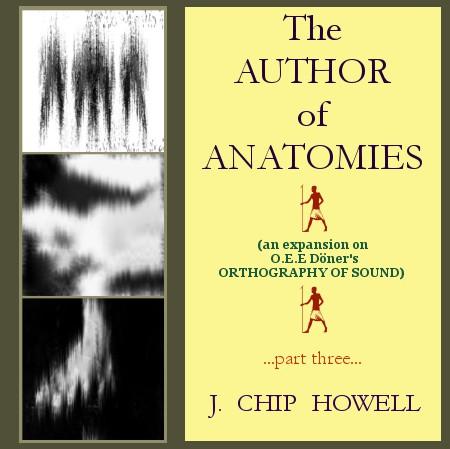
They spent three nights, listening to the gods and printing complex god-songs onto tongues of cheap, flimsy paper: for later study and other, opaque reasons. Anéa worked the sonographic apparatus with graceful, apparently instinctive ease. Teb spoke of clicks and whistles, grumbles and chirps, interpreting each of the strange, jagged shapes on the sonographic screen. An entire orthography unfolded beneath his gaze and he read it as easily as Anéa recorded and printed the ink-line shapes of those hollow, alien sounds.
They spent two days following the god-herd.
“They know Laetus,” Teb said, on the second afternoon. “They allow him to approach their nests. The younger ones run up to him. They touch him. The females, too. The big, bull males simply tolerate him. They don’t reach forward and prod him with their great, clawed fingers. But they nod, singing…walk away, and then sing to one another. Laetus says that they are comparing notes. He knows each of them by sight, by temperament. They, I think, know him as intimately. I think that he is one of them now.”
—And now
—in darkness
—the night-sounds of Ööna surrounded Ilíás as he lay, naked, in the soft warmth of another rented bed. It had all ended so quickly and on so unfinished a note. Laetus was there, on the far slope of a mountain named Saturn. Teb knew how to reach him, knew that it was a hard climb from the foothills and the shallows where the god-herds nested. He might have agreed to guide them up…he might have been excellent at such a task. There was something of a goat in his manner, a sure-footed grace expressed whenever he walked: a wariness in the gaze that might meet the challenges of ascending a mountain. But, Ilíás knew, there was more to climbing a mountain than the whim he felt, and so—despite the whim and the near-desperation embedded in it—he agreed to Anéa’s suggestion that they stay on lower ground.
“There are no mountains like Saturn in your city-state…not really. It’ll take more than ambition to meet Saturn and challenge his slopes. You can come back. We can come back. Later. When we’re better prepared.”
And after that, Teb drove them back to Ööna. He’d spoken—at length—with Anéa, and Anéa stepped to Ilíás’ side and touched his arm, gently.
“It’s best if we go,” she’d said. “Sooner rather than later.”
Ilíás was alone now. The previous three nights echoed through his thoughts. There’d been an odd, smoldering presence in Anéa’s gaze: a horrible, cloying entreaty in the manner in which she’d touched him, and now (in this bed and in this room) her expression decompressed and expanded through the space of his thoughts, explaining all that she’d refused to say as if she’d come from the room next door and clarified everything herself.
For three nights, Ilíás realized, Anéa felt fear.
Sheer, howling terror.
* * *
“I’m sorry,” Anéa said, on the train to Lhix.
“Sorry,” Ilíás asked, his gaze drawing up from dirt wedged beneath his fingernails. Dirt, he knew, from the Foothills of Saturn…dirt, he knew, that bore the footprints of the pseudo-reptilian and eyeless creatures that Teb’s people still half-revered as gods.
“You wanted to find him. You wanted to see him. I was supposed to help you do that. I didn’t. I’m sorry.”
Silence.
He could think of nothing to say, nothing honest. There might have been a thousand assuaging words, a dozen or so conciliatory phrases spoken softly or with pantomime dismissal, but they would have been wrong on too fundamental a level: a betrayal of what he felt and what she shared with him in this moment.
Ilíás pressed back in his seat, listening to the clatter of train wheels on tracks as landscape scrolled by. He wanted to look into her eyes and see what he’d seen in the tavern with the drinker’s muse and her falsely-incompotent musician accompanists, but he saw something else, instead: it was vulnerable and terrifying and nowhere near the half-incendiary bravado she threw at the world when she looked at it. He glanced away from her and tried to lose himself in the rolling countryside, in the lemon groves, the olive groves, and the undulant, grassy hills in the far, far distance.
“Will you go back?” Anéa asked.
“To the Foothills?”
“To Mági’ár.”
He nodded. He closed his eyes. “Soon,” he said. “And you…what about you?” he asked. “Will you go back?”
Anéa shuddered. “No.” She spoke decisively, a chill in her voice.
Ilíás nodded. “When Laetus went away…when he left Mági’ár, I was distraught. For years, I thought of him…with anger, with lust. I was sad. I hated him. I loved him. I still do. I dreamed of being reunited with him, of sharing a bed with him, if only for one night. I’d planned everything I was to say.” He braved a glance at her.
Anéa’s eyes flared with an emotion Ilíás couldn’t read: there was something like fear in it, something like anger, directed away from him and in some obscure, arcane direction—at Laetus, maybe, though maybe not. “He was with me when you were dreaming that. But I’ve lost him, too…”
Ilíás nodded. “Did…um…did he…did you…?”
“No. He never slept with me, either, and I never snuck into his room to smell his tunics or to lie in his bed touching myself and pretending that my hand was his hand. I never stole one of his drawings.”
“I’m sorry,” Ilíás said.
“Sorry?”
He smiled, but he felt only irony in the expression. “You might have made a good thief.”
For the first time in a long, long while, Anéa laughed and it was as if a dam had broken. She laughed. She chuckled and twittered. She made brief hyena sounds and then, as quickly as it began, her laughter stopped. It was, Ilíás thought, the first time he’d ever heard the raw eloquence of those sounds in the shape of her voice.
For long moments after that, neither of them spoke.
THE END
At first, the ancient author, Hieronymus, was only supposed to illuminate a single post. As it stands, that ancient, other-worldly author, has formed something off a foundation for an entire universe. Though Heironymus isn’t directly referenced in the story you’ve presumably just read, he is a part of this story’s history, and if you look back in my gallery, you may find other hints and whispers of this particular world in such tales as Life Among Penguins or Songs of Wrath and Valor.
As always, thank you for viewing, reading, and commenting, and I hope that you’re all having a great week. This story was to be posted yesterday, but technical difficulties (and a fatal computer crash) prevented such an action. Today, after a quick (and free) computer repair, I’m able to post, and I hope (as well) to catch up with viewing and commenting.

Comments (11)
Fantastic read and great story Thank you very much for sharing this with us
I really enjoyed reading this. Very well done.
Excellent to read and I hope Ilíás will have better luck next time he travels :-) Well done Chip :)
I have copied and will read later it seems I never have the time to read anymore someone comes to the door,phone rings,frank calls me etc etc ::: thanks
I had realized the connection to Songs of Wrath and Valor, but not to Life Among Penguins. Thanks for the note! This world is fascinating and beautiful and marvellously alien, and I love it. You create such richness in your prose! Ending this with Ilíás and Anéa deepening their friendship and yet never finding Laetus is perfect. It creates hope and tension both, and leave me with a sense of things being as they should be. If you pick this up again, I hope you will leave Laetus-the-man undiscovered on his mountain. He is an idea, a future god, and unless (or until) he has effected a transformation, I hope he stays up there, shrouded in mist and mystery. A wonderful tale ... I ate it up with a spoon!
excellent work Chip!
fantastic work!
You can't invent anything that has never existed befor, so you've done a really great job sharing with us what you already know..! well done, Chip!
Not quite the end I had been anticipating. Laetus' place in Ilíás, and Anéa's, world is somehow stronger than before in spite never attaining him. Such are these quests I suppose; finding the grail is not really the point. Though, unlike auntietk, I very much hope we'll meet Laetus some day even if it just in passing at that old book store in Ööna. I was really entranced with the days spent in the mountains listening to the gods and your careful envisioning of their language and character. It makes me wish we could have spent more time there. I hope for another tale from this world.
I'm taken by the careful dance around the edges of the situation by all the characters, including the ones we don't actually meet...haunting story, Chip!
Outstanding writing my friend. God bless.