
















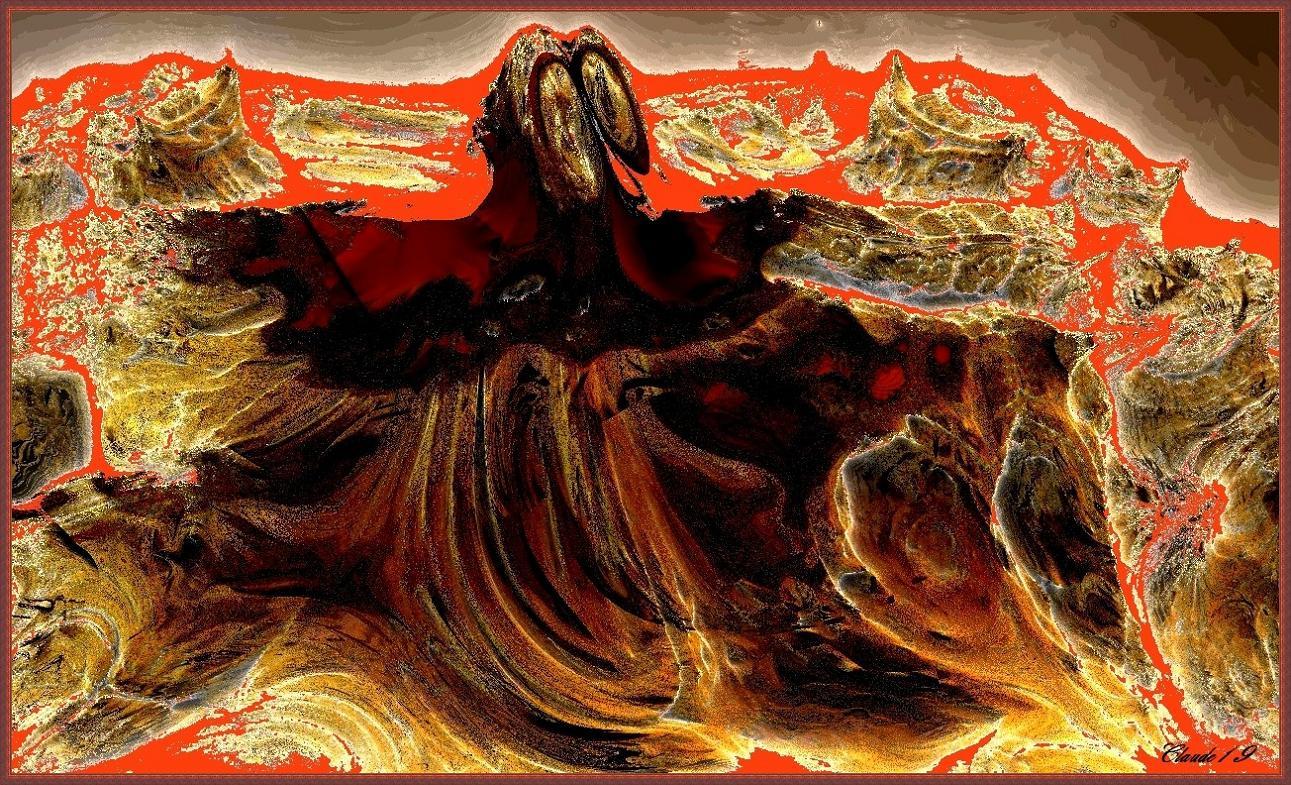
V.O.L.C.A.N.O. by claude19
Close
Hover over top left image to zoom.
Click anywhere to exit.
Members remain the original copyright holder in all their materials here at Renderosity. Use of any of their material inconsistent with the terms and conditions set forth is prohibited and is considered an infringement of the copyrights of the respective holders unless specially stated otherwise.
No AI - This artwork was created entirely by hand or with traditional digital tools.
Description
M/B
Have a nice day !
Un volcan est un relief terrestre, sous-marin ou extra-terrestre formé par l'éjection et l'empilement de matériaux issus de la montée d'un magma sous forme de lave et des cendres. Ce magma provient de la fusion partielle du manteau et exceptionnellement de la croûte terrestre. L'accumulation peut atteindre des milliers de mètres d'épaisseur formant ainsi des montagnes ou des îles. Selon la nature des matériaux, le type d'éruption, leur fréquence et l'orogenèse, les volcans prennent des formes variées mais en général ayant l'aspect d'une montagne conique, surmontée par un cratère ou une caldeira.
Le lieu principal de sortie des matériaux lors d'une éruption se situe dans la plupart des cas au sommet du volcan, là où débouche la cheminée volcanique, mais il arrive que des ouvertures latérales apparaissent sur les flancs ou aux pieds du volcan.
Deux grands types de volcans existent sur Terre :
* les « volcans rouges » aux éruptions effusives relativement calmes et émettant des laves fluides sous la forme de coulées. Ce sont les volcans de « point chaud », et les volcans d' « accrétion » principalement représentés par les volcans sous-marins des dorsales océaniques ;
* les « volcans gris » aux éruptions explosives et émettant des laves pâteuses et des cendres sous la forme de nuées ardentes ou coulées pyroclastiques et de panaches volcaniques. Ils sont principalement associés au phénomène de subduction comme les volcans de la « ceinture de feu du Pacifique ».
On compte environ 1 500 volcans terrestres actifs dont une soixantaine en éruption par an. Les volcans sous-marins sont bien plus nombreux.
Le « volcanisme » est l'ensemble des phénomènes associés aux volcans et à la présence de magma. La « volcanologie » ou « vulcanologie » est la science de l'étude, de l'observation et de la prévention des risques des volcans.
Le terme « volcan » tire son origine de Vulcano, une des Îles Éoliennes nommée en l'honneur de Vulcain, le dieu romain du feu dont l'équivalent dans le panthéon grec est Héphaïstos.
A volcano is a relief land, underwater or extraterrestrial formed by the ejection and stacking of materials from the rise of magma as lava and tephra such as ash. This magma derived from partial melting of mantle and crustal exceptionally. The accumulation may reach thousands of meters thick forming mountains and islands. Depending on the nature of the material, type of eruption, their frequency and orogeny, volcanoes take various forms but generally has the appearance of a conical mountain, surmounted by a crater or caldera.
The principal place of output materials during an eruption is in most cases the top of the volcano, where the volcanic vent opens, but sometimes lateral openings appear on the sides or foot of the volcano.
Two major types of volcanoes exist on Earth:
* The "red volcanoes" to effusive eruptions emit relatively calm and fluid lava in the form of castings. These are the volcanoes of "hot spot", and volcanoes of "accretion" mainly represented by the submarine volcanoes of the mid-ocean ridges;
* The "volcanoes gray explosive eruptions, emitting lava and ash pastes in the form of pyroclastic flows or pyroclastic flows and volcanic plumes. They are mostly associated with subduction volcanoes such as the "Pacific Ring of Fire."
There are approximately 1500 active terrestrial volcanoes erupting including sixty per year. The submarine volcanoes are much more numerous.
The "volcano" is the set of phenomena associated with volcanoes and the presence of magma. The "Volcano" or "Volcanology is the science of the study, observation and prevention of risks from volcanoes.
The term "volcano" originated from Vulcano, one of the Aeolian Islands, named in honor of Vulcan, the Roman god of fire whose equivalent in the Greek pantheon is Hephaestus.
d'après WIKIPEDIA.

Comments (32)
superb!!