

















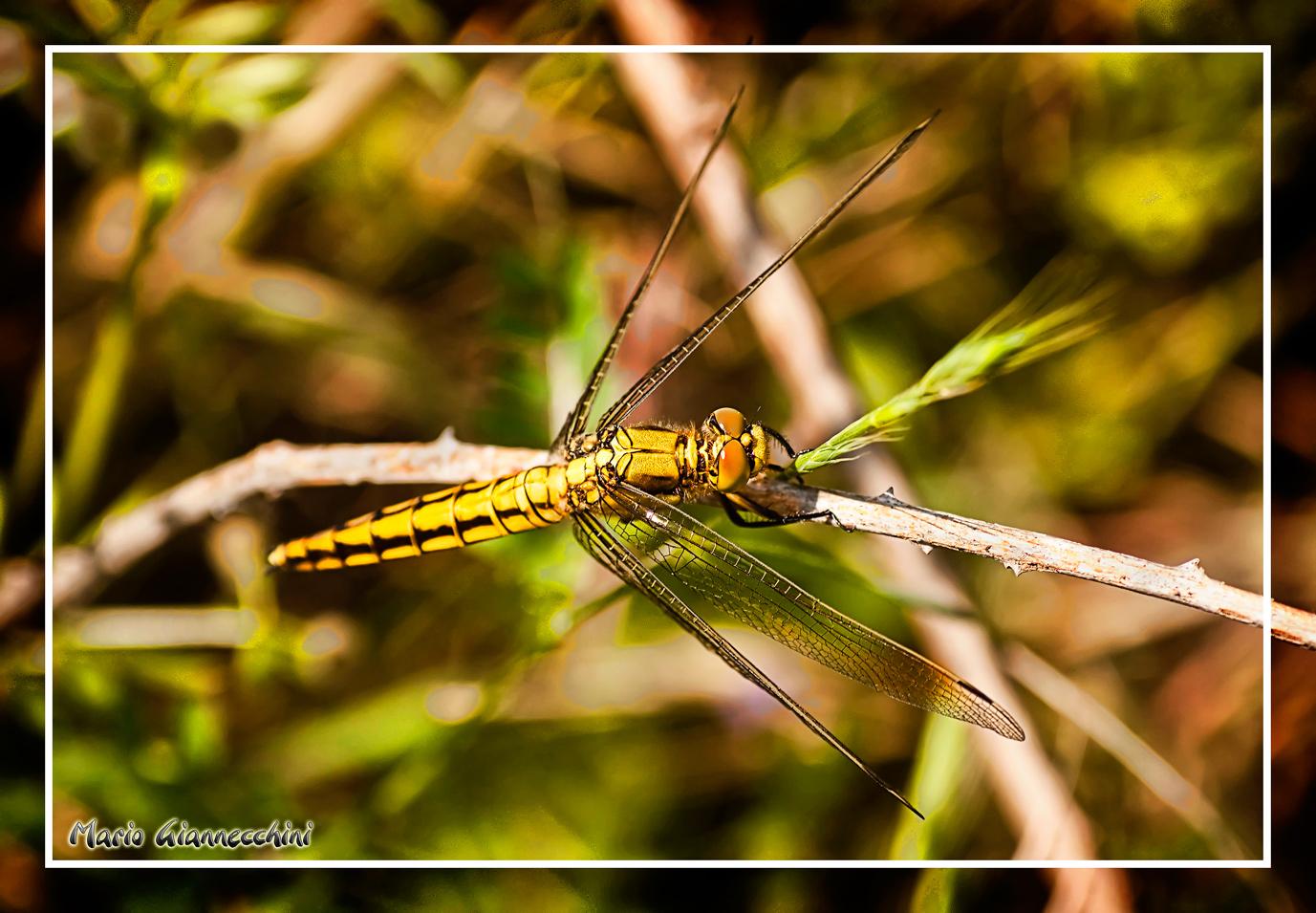
Libellula depressa femmina by mariogiannecchini
Close
Hover over top left image to zoom.
Click anywhere to exit.
Members remain the original copyright holder in all their materials here at Renderosity. Use of any of their material inconsistent with the terms and conditions set forth is prohibited and is considered an infringement of the copyrights of the respective holders unless specially stated otherwise.
No AI - This artwork was created entirely by hand or with traditional digital tools.
Description
Un altro tipo di libellula che , col suo colore oro , alla luce del sole risplende come un gioiello . Leggermente più grande delle precedenti .
Another type of dragonfly, with its golden color, the sunlight shines like a jewel. Slightly larger than the previous ones.
Libellula depressa L. - Corpo lungo circa 4 cm e apertura alare di 7-8 cm. L'addome è lungo e slargato, a ffusolato posteriormente, di colore azzurro chiaro nel dorso, nel maschio, giallo miele nella femmina.
Dragonfly depressed L. - Body about 4 cm long and wingspan of 7-8 cm. The abdomen is long and square, tapered rear, light blue in the back in the male honey-yellow in the female.
Le Libellule appartengono al Sottordine degli Anisotteri. questi si distinguono dagli Zigotteri (damigelle, come Calotterice vergine - Calopteryx virgo L.) perchè da posate tengono le ali aperte e orizzontali mentre le damigelle le tengono verticali e chiuse sopra il corpo.
Ciclo biologico
Sono legati biologicamente all'ambiente acquatico nelle cui vicinanze trascorrono la loro esistenza, le ninfe vivono infatti nell'acqua e sono ottimi predatori, cacciando prevalentemente insetti e girini.
Quando i giovani sono maturi (il loro sviluppo può durare anche 5 anni) avviene la metamorfosi: la ninfa si arrampica fuori dall'acqua dove, in pochi giorni, svilupperà un insetto adulto.
Dragonflies belong to the suborder Anisotteri. these differ from Zigotteri (bridesmaids, as Calotterice virgin - Calopteryx virgo L.) because of holding the cutlery wings and horizontal and vertical take the bridesmaids and closed above the body.
Life Cycle
Are biologically related to the water environment near which they spend their lives, because the nymphs live in water and are excellent predators, hunting mainly insects and tadpoles.
When young people are mature (their development can last 5 years) is the metamorphosis: the nymph climbs out of the water where, in a few days, develop an adult insect.
Good day and good week
Thanks for the comments and the favourites of previous image

Comments (29)
Wonderful capture and very beautiful insect
gorgeous capture!!
Very nice shot!
Beautiful capture.
Excellent
Wonderful capture picture erland
Beautiful picture resembling a gold ingot.
Beautiful close up, dear Mario, you get closer every time. Intersting information too. Have the best day. Hugs. Di. xx
An amazing series of images. Beautiful picture.
Brillante e fantastica macrofotografia il mio amico Mario.....!!! Complimento......!!!!
beautiful picture!! bellissima!
Sharp detail! Excellent
bellissima foto!!! buona giornata!!
Excellent macro!
Wonderful image - it looks like a piece of jewelry - the colors and shine are so beautiful. Well done.
what a BEAUTIFUL dragonfly!!!! FANTASTIC picture!!!!!!
A so stunning macro!
Libellula bellissima! Ancora una volta un'immagine stupenda! Eccellente Mario!!
ALTRA OTTIMA FOTO! COMUNQUE GLI EDIFICI SONO PIù FACILI DA FOTOGRAFARE E NON SCAPPANO!NON SEMPRE, ALMENO... ;-D)))
BELLISSIMO IL TITOLO...!! SUPERBA CAPTURA E UNA GALLERIA DI FOTO SUPER..!!!!
Very nice. The details are excellent, as are the compo, lighting, and colors. This is a very pretty Dragonfly. Thanks for sharing. Lee
Remarkable work!
How very beautiful!
Distorsione di velocità, un'altra bella libellula? Ciò è solo spettacolare. La composizione superba e l'illuminazione è magnifiche. Wow, another beautiful dragonfly? This is just spectacular. Superb composition and the lighting is magnificent.
Exquisite capture Mario. Love these dragonflies. Dana
Another wonderful and stunning macro photoshot my friend, love it.
another excellent capture mario..
Very good!
Non sapevo ci fossero libellule "depresse"!!! Bisognerebbe mandarle dallo psicologo! ;) Splendida macro! :)