


















A Living dinasaur by anglerp
Close
Hover over top left image to zoom.
Click anywhere to exit.
Members remain the original copyright holder in all their materials here at Renderosity. Use of any of their material inconsistent with the terms and conditions set forth is prohibited and is considered an infringement of the copyrights of the respective holders unless specially stated otherwise.
No AI - This artwork was created entirely by hand or with traditional digital tools.
Description
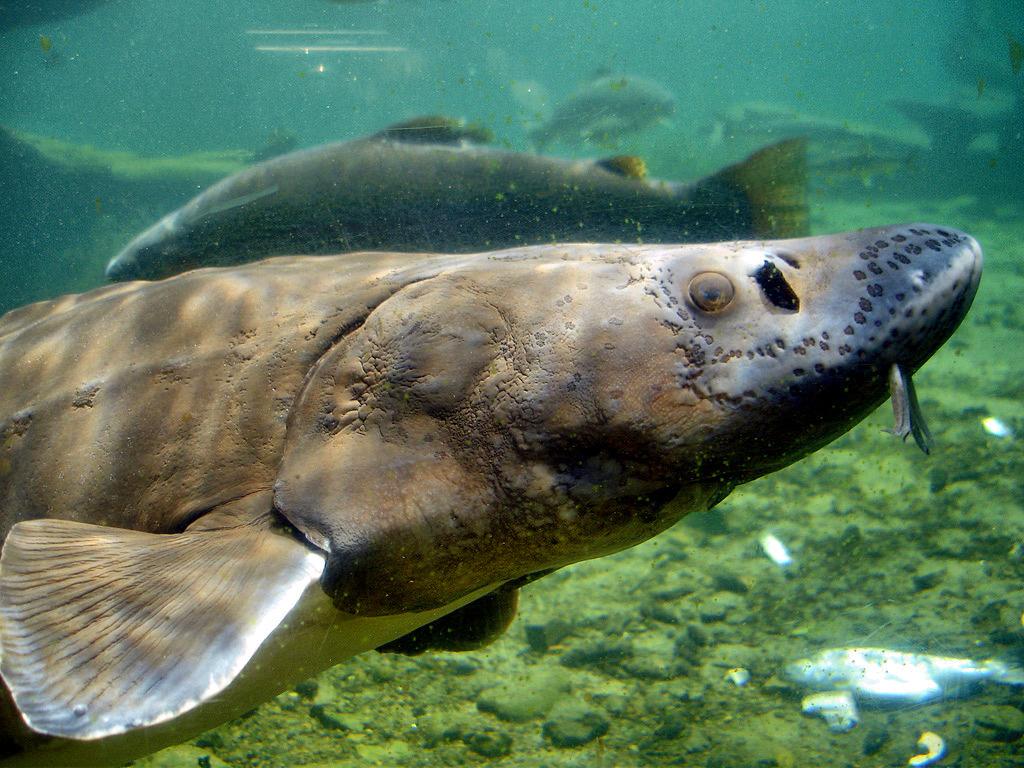
Sturgeon at the Bonneville hatchery!
Sturgeon are a primitive fish found mostly in fresh water and the largest gamefish in North America. Their size can range from a few inches long to over 15 feet in length. This maximum size is a topic of much discussion among those that pursue the White Sturgeon. The largest I have ever boated was 11 foot and 1 inch. The measurement was taken with a 12 foot long pole in the water as the fish weighed in excess of 500 pounds and was not removed from the water.
This fish has a cartilage skeleton and sandpaper rough hide much like a shark. The Sturgeon lacks teeth and uses a set of four barbells and an extendible mouth to locate food. The body is lined with 5 rows of diamond shaped scales called Scutes from head to tail. The scutes are sharpest in the smaller fish and discourage predators from eating the young fish. The sense of taste/smell is the most prevalent for this fish, and we can use this fact to target them.
Columbia Sturgeon come in 3 size classes; shakers, keepers and oversize. The rules frequently change but as of this writing they are as follows: A shaker is any fish under 42" in length, and must be released unharmed when caught. It is called a shaker because the fish will vigorously shake the fishers rod when it is on the line. The faster the vibration on the rod, the smaller the fish.
A Keeper is a fish between 42" and 60" in length. This fish may be retained when caught and currently a fisher may keep one a day and up to 5 a year. It is always a matter of speculation on the boat when a fish is hooked as to its size. The Keeper is easily distinguished because it shakes the rod somewhat slowly and it will run hard to pull line off of the reel at least for a few seconds. If you have some control and the fish occasionally takes line and you can't stop him, usually it's a keeper.
This brings us to the last class, the Peeler. This fish is unmistakeable,if seldom seen. If you fish for the White Sturgeon for very long you will encounter a fish that will peel line off the reel and cannot be stopped. You have two choices; snap the line, or pursue the fish and bring him to the boat. There is a fishery that coincides with the American Shad run for oversize or Peeler sturgeon. Heavy tackle and a special quick release anchor setup are required for this fishery. Three pound lead weights, 10/0 hooks and whole shad are the typical setup. Since a large fish can strip a reel in less than a minute in a heavy current, Peelers are not for the fainthearted. All oversize sturgeon must be released unharmed when boated. It is a must to play the fish quickly as exhausted Peelers may die after being released. The common practice is to pass the rod off when a fisher becomes tired and to horse the fish to the boat. The battle can last an hour or more! The fish must not be pulled out of the water as internal organ damage may occur, killing the fish.
Almost without exception a hooked Peeler will jump at least once, thrilling all who see it. This fish is a monster and is also known as the 'Poor man's Marlin'.
There is some controversy regarding the consumption of White Sturgeon for food. The taking of eggs or 'Caviar' is excluded by the size restrictions. The larger fish are the breeding stock. In central Asia and Russia the Beluga sturgeon have been decimated by the 'Caviar' market. The smaller 42" to 48" fish are the best eating. The problem is that the eating habits of this fish cause it to accumulate toxins from the river as it feeds.
Sturgeon eat fresh and salt water shellfish, various baitfish, and any organic material they find while scavenging. This can include sewage, dead fish, and paper mill waste. Dioxin and PCB's are routinely found in tested sturgeon. The highest concentrations are found in the liver, pancreas and other organs with a much lower concentration found in the edible meat. It is wise to limit your consumption of this fish to a few meals a year to limit your exposure to these toxic chemicals.

Comments (10)
Perfect. 5+.
wow, this is a wonderful shot.....sharp and so detailed...hard to do through glass but this is a beauty
excellent!
SUPERB!
wonderful shot
Amazing, thanks for the narrative- really interesting
Superb shot and the info is much appreciated!
...a cool shot and a lesson....thanks!
A cool shot and interesting if somewhat disturbing for the fish, information. Well taken! Rob.
what an amazing fish my partner fishes for pike. i bet he would love to fish for these as well