














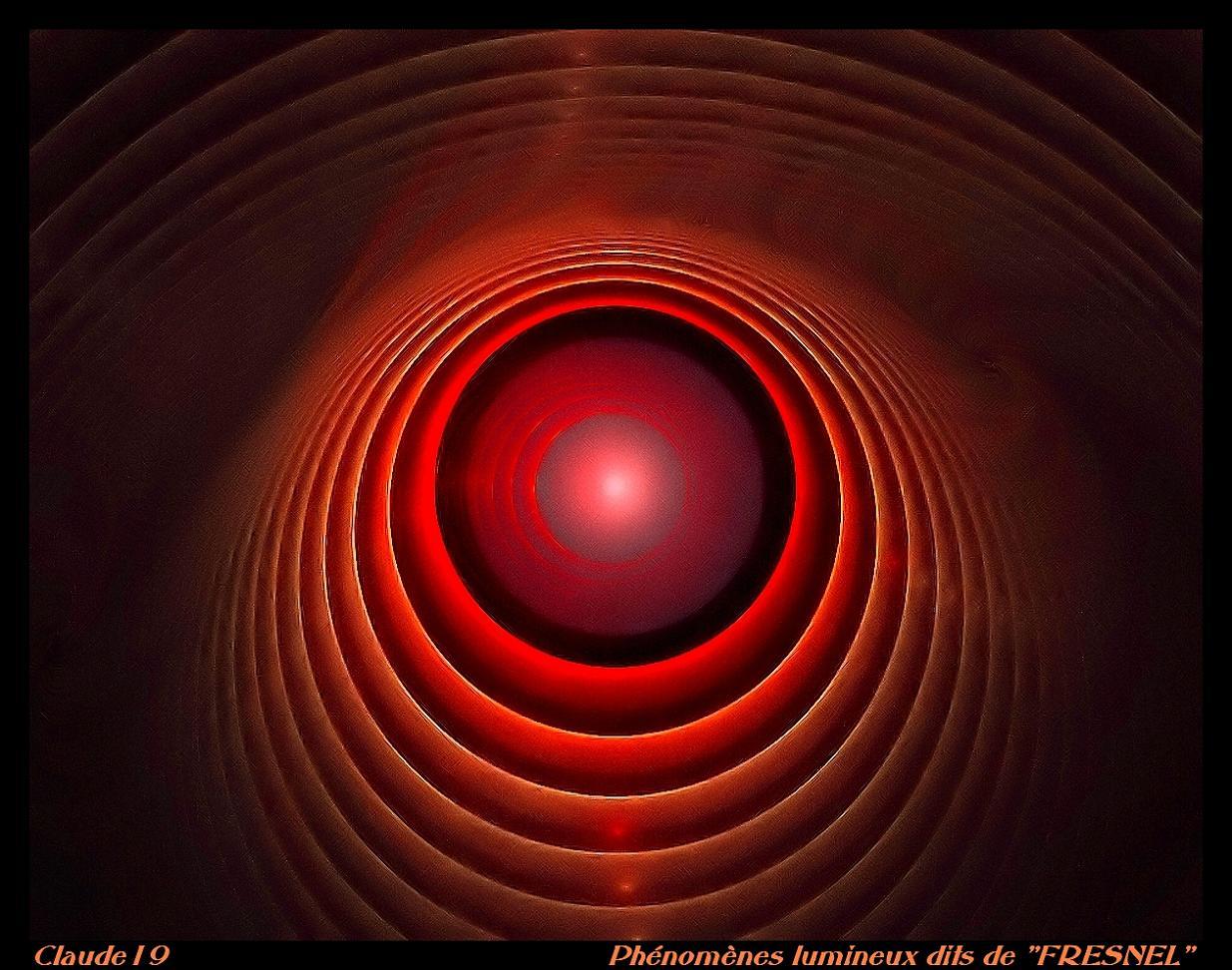
PROPAGATION of Light waves according to "FRESNEL" by claude19
Close
Hover over top left image to zoom.
Click anywhere to exit.
Members remain the original copyright holder in all their materials here at Renderosity. Use of any of their material inconsistent with the terms and conditions set forth is prohibited and is considered an infringement of the copyrights of the respective holders unless specially stated otherwise.
No AI - This artwork was created entirely by hand or with traditional digital tools.
Description
Fils d'architecte, Augustin Fresnel naît à Broglie, dans l'Eure. Il entre à l'École centrale de Caen à l'âge de 13 ans puis à l'École polytechnique à 16 ans et demi (promotion 1804). En 1809, il devient membre de l'École nationale des ponts et chaussées au service des phares. Il est membre de l'Académie des sciences en 1823 ainsi que de la Royal Society, qui lui décerne la Médaille Rumford en 1824.
Augustin Fresnel débute sa carrière en réalisant de nombreuses expériences sur les interférences lumineuses, indépendamment de celles de Young, pour lesquelles il forge la notion de longueur d'onde. Il calcule les intégrales dites de Fresnel. Il prouve le premier que deux faisceaux de lumière polarisés dans des plans différents n'ont aucun effet d'interférence. De cette expérience, il déduit que le mouvement ondulatoire de la lumière polarisée est transversal et non longitudinal (comme celui du son) ainsi que l'on croyait avant lui.
Il est le premier à produire une lumière polarisée circulaire. Ses formules, dites de Fresnel, sur la réfraction sont toujours utilisées. Dans le domaine de l'optique appliquée, Fresnel invente la lentille à échelon utilisée pour accroître le pouvoir de l'éclairage des phares. Il meurt de la tuberculose en 1827 à Ville-d'Avray, près de Paris.
Wire of architect, Augustin Fresnel is born in Broglie, in the Eure. He enters to the central School of Caen at the 13 years age then to the polytechnic School to 16 years and half (promotion 1804). In 1809, he becomes member of the national School of the Highways Departments to the service of the headlights. He is member of the Academy of Science in 1823 as well as Royal Society, which decrees the Rumford Medal to him in 1824. Augustin Fresnel begins his career by carrying out many experiments on the luminous interferences, independently of those of Young, for whom it forges the concept wavelength. He calculates the integrals known as of Fresnel. He proves the first that two beams of light polarized in different plans do not have any effect of interference. From this experiment, it deduces that the undulatory movement of the polarized light is transverse and nonlongitudinal (as that of the sound) as one believed before him. It is the first to produce a circular polarized light. Its formulas, known as of Fresnel, on the refraction are always used. In the field of optics applied, Fresnel invents the zoned lens used to increase the capacity of the lighting of the headlights. He dies of tuberculosis in 1827 with City-in Avray, close to Paris.

Comments (17)
Excellent!!!
Beautiful image and wonderful story
Gorgeous composition and design!!!
STUPÉFIANT !
Hey very cool one and nice story!
Very cool Claude and the bio was interesting as well!
Yes, very powerful and gorgeous generator of light!!!
wonderful looking
Beautiful subtlety, texture and lighting.
Great image with a wonderful history lesson. Nicely done!!
Fantastic work!
Really nice image Claude!Amazing form and explication!
Ohhh, cool one Claude !
qu'y a t'il au bout du tunnel? un cours d'histoire en prime! bravo Claude!
Awesome!
Stunning work here...Hugs
WOW! Well represented! The short biography of Augustin Fresnel was excellent reading. Another new thing learned!